
1. What Is White Pepper?
White pepper is a spice made from the berries of the pepper plant (Piper nigrum). Unlike black pepper, white pepper is generally produced from fully ripe pepper berries. The berries are soaked and processed to remove their outer skin, then cleaned and dried.
After processing, white peppercorns have an off-white or grayish-white appearance, a relatively smooth surface, and a distinctive pungent aroma. White pepper has a noticeable spicy taste and is commonly used in dishes where a lighter appearance is preferred or visible black specks are undesirable.
Thanks to its distinctive flavor and versatility, white pepper is widely used in home cooking, restaurants, food manufacturing, and the international spice trade.
2. Uses of White Pepper in Food Processing
2.1. Adding Heat and Aroma to Food
One of the most common uses of white pepper is to add heat and enhance the aroma of food. Its distinctive flavor makes dishes more flavorful without significantly affecting their overall appearance.
White pepper can be used for marinating, seasoning, or finishing dishes. Depending on the recipe and desired flavor, it can be used whole, coarsely ground, or finely ground.
2.2. Use in Soups, Sauces, and Light-Colored Dishes
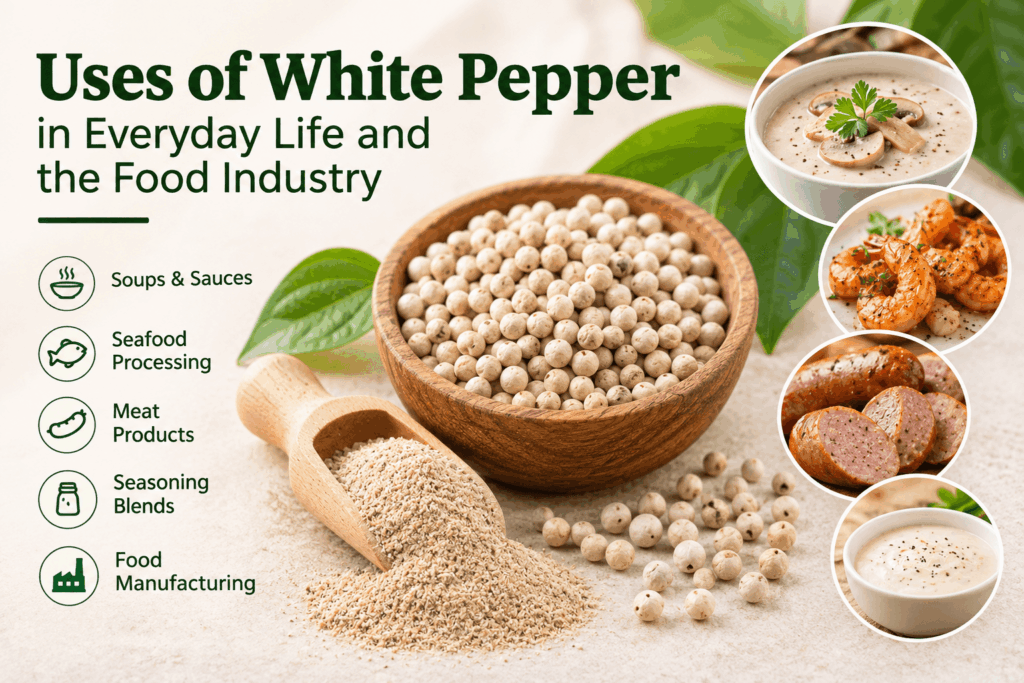
White pepper is particularly suitable for light-colored dishes such as cream soups, chicken soup, seafood soup, white sauces, and potato-based dishes.
Compared with black pepper, white pepper helps minimize the appearance of dark specks on food. This makes it a popular choice in restaurants, hotels, and professional kitchens.
2.3. Seasoning for Seafood
White pepper is commonly used to enhance the flavor of fish, shrimp, squid, crab, and other seafood.
Its distinctive heat and aroma can be combined with ginger, garlic, onion, fish sauce, and other seasonings to create suitable marinades.
In industrial food processing, white pepper is also used in products such as fish cakes, seafood balls, surimi, and various frozen seafood products.
2.4. Use in Meat and Sausage Processing
White pepper is a common seasoning ingredient in many processed meat products, including:
- Sausages and Chinese-style sausages.
- Meatballs and meat patties.
- Ham and other processed meat products.
- Ground meat and marinated meat.
- Various ready-to-eat foods.
When combined with salt, garlic, onion, and other seasonings, white pepper contributes to the distinctive flavor of these products.
2.5. Ingredient in Industrial Seasoning Blends
White pepper can be blended with other spices to produce seasoning mixes, marinades, and powdered seasonings.
Common applications include:
- Seasoning powders for instant noodles.
- Seasonings for soups and broths.
- Spice blends for meat and seafood.
- Soup bases and mixed seasonings.
- Seasonings for canned and processed foods.
For food manufacturers, ground white pepper offers convenience in measuring, blending, and maintaining consistent flavor across production batches.
3. Applications of White Pepper in International Cuisine
3.1. Asian Cuisine
White pepper is widely used in many Asian cuisines, particularly in soups, congee, noodles, broths, and stir-fried dishes.
In Vietnam, white pepper can be used in soups, congee, seafood dishes, and processed meat products. It is also a familiar seasoning in traditional recipes in China and several Southeast Asian countries.
3.2. European Cuisine
In European cuisine, white pepper is commonly used in light-colored sauces, cream soups, mashed potatoes, and certain fish dishes.
Because it is less visually noticeable than black pepper, white pepper helps maintain the uniform appearance of dishes while adding the desired heat and aroma.
3.3. Restaurants, Hotels, and Food Service
In the food service sector, white pepper is a versatile seasoning that can be incorporated into a wide range of recipes.
Restaurants, hotels, catering companies, and commercial kitchens commonly use white pepper in broths, soups, sauces, meat dishes, and seafood preparations.
4. Uses of White Pepper in Everyday Life
In addition to its applications in the food manufacturing industry, white pepper is a familiar seasoning in home kitchens.
Common uses include:
- Seasoning soups, congee, and noodles.
- Marinating fish, shrimp, chicken, and pork.
- Enhancing the flavor of sauces and stir-fried dishes.
- Combining with salt to make seasoning blends or dipping seasonings.
- Adding flavor to dishes where a light-colored appearance is preferred.
White pepper can be used whole, coarsely ground, or finely ground, depending on the cooking requirements.
5. Differences Between White Pepper and Black Pepper
Both white pepper and black pepper come from the same plant, Piper nigrum, but they differ in harvesting maturity and processing methods.
| Criteria | White Pepper | Black Pepper |
| Raw material | Generally fully ripe pepper berries | Generally berries harvested before full ripeness |
| Processing | Outer skin is removed after soaking and processing | Whole berries are dried with the outer skin intact |
| Appearance | Off-white or grayish-white | Black or dark brown |
| Flavor | Distinctive heat and aroma | Pungent heat with a strong, complex aroma |
| Applications | Soups, light-colored sauces, seafood, sausages | Grilled meat, stir-fried dishes, sauces, and many other foods |
The choice between white and black pepper depends on the recipe, desired flavor, and appearance of the final product.
6. How to Use and Store White Pepper
6.1. How to Use White Pepper
To preserve its distinctive aroma, white pepper should be used in appropriate amounts according to each recipe.
Some practical tips include:
- Whole white peppercorns can be ground just before use.
- Ground white pepper is suitable for recipes that require quick and even blending.
- White pepper can be added during cooking or near the end of preparation, depending on the recipe.
- Adjust the quantity according to the type of food and desired level of heat.
6.2. How to Store White Pepper
White pepper should be stored in a clean, dry environment and protected from direct sunlight.
Recommended storage practices include:
- Use airtight packaging to minimize exposure to air and moisture.
- Keep the product away from heat sources and humid areas.
- Store it in a clean, cool, and well-ventilated place.
- Avoid opening the packaging repeatedly when the product is not being used.
For ground white pepper, airtight packaging and limited exposure to air are particularly important for maintaining its aroma during storage.
7. White Pepper in the Spice Trade and Export Market
White pepper is traded in international markets and supplied in different forms to meet the needs of importers, distributors, food manufacturers, and spice trading companies.
7.1. Common Forms of White Pepper
Depending on the intended application, white pepper is commonly available in the following forms:
- Whole White Pepper: Whole white peppercorns, suitable for distribution, retail, and food processing.
- Ground White Pepper: Ground white pepper, convenient for food manufacturing and seasoning blends.
- White Pepper Powder: Finely ground white pepper, commonly used in seasoning formulations and processed foods.
7.2. Key Criteria for B2B White Pepper Purchasing
When importing or purchasing white pepper in bulk, businesses should consider the following criteria:
- Product origin and traceability.
- Moisture content and storage conditions.
- Color, size, and uniformity of the peppercorns.
- Foreign matter content and cleaning requirements.
- Microbiological specifications and food safety requirements.
- Packaging specifications and transportation conditions.
- Quality standards agreed upon in the contract and required by the destination market.
Specific product specifications should be agreed upon between the supplier and buyer based on the intended application, import regulations, and technical requirements of each market.
7.3. The Role of White Pepper Manufacturers and Suppliers
For importers and food processing companies, choosing a reliable white pepper manufacturer or supplier is essential to maintaining a consistent supply of quality products.
A professional supplier should provide clear information about product origin, technical specifications, packaging options, and quality documentation.
The ability to meet order quantities, delivery schedules, and individual customer requirements is also an important factor when selecting a white pepper supply partner.
8. Frequently Asked Questions About White Pepper (FAQ)
8.1. What Is White Pepper Made From?
White pepper is made from the berries of the pepper plant (Piper nigrum). The ripe berries are generally soaked and processed to remove their outer skin. The remaining seeds are then cleaned and dried.
8.2. Is White Pepper Spicy?
Yes. White pepper has a distinctive spicy taste due to the naturally occurring compound piperine in peppercorns. The perceived level of heat depends on the product’s quality, processing method, and quantity used.
8.3. Which Is Hotter, White Pepper or Black Pepper?
Neither type can be considered consistently hotter in every situation. The perceived heat and aroma depend on the pepper variety, raw material quality, processing conditions, and storage methods. The two types generally have different flavor profiles.
8.4. What Dishes Is White Pepper Commonly Used In?
White pepper is commonly used in soups, congee, light-colored sauces, seafood dishes, meatballs, sausages, and processed food products. It is also suitable for dishes where visible black specks are undesirable.
8.5. Can White Pepper Replace Black Pepper?
White pepper can replace black pepper in many recipes. However, the flavor and appearance of the finished dish may change. The amount should be adjusted according to the recipe and desired result.
8.6. What Is the Difference Between Whole and Ground White Pepper?
Whole white peppercorns are suitable for grinding when needed and generally retain their aroma longer when stored properly. Ground white pepper is more convenient for measuring, blending, and industrial food production.
8.7. How Should White Pepper Be Stored?
White pepper should be stored in airtight packaging in a cool, dry place away from direct sunlight. Exposure to moisture, air, and heat should be minimized to maintain product quality.
8.8. How Is White Pepper Used in the Food Industry?
In the food industry, white pepper is used as an ingredient in soups, sauces, sausages, meatballs, seafood products, instant noodles, powdered seasonings, and spice blends. It is available in whole and ground forms depending on production requirements.
8.9. What Should Buyers Consider When Purchasing White Pepper in Bulk?
Businesses should evaluate product origin, moisture content, color, peppercorn size, foreign matter, microbiological specifications, packaging, and quality documentation. Specific requirements should be confirmed with the supplier before placing an order.
9. Conclusion
White pepper is a versatile spice with a wide range of applications, from everyday cooking to industrial food production. Its distinctive heat, characteristic aroma, and light color make it suitable for soups, sauces, seafood, meat products, and seasoning blends.
In international trade, white pepper remains an important ingredient for importers, distributors, and food manufacturers. Choosing products with clear origin, suitable technical specifications, and appropriate packaging is essential to maintaining quality throughout production and commercial operations.
TOPAX – Vietnamese Pepper Manufacturer and Supplier
Pepper is an essential product in Vietnam’s spice industry and an important part of TOPAX’s product portfolio. We offer a wide range of pepper products, including Black Pepper 400, 450, 500, 550 G/L FAQ, Black Pepper 500, 550, 570, 600 G/L Spiral Cleaned, Jumbo Black Pepper 570–580 G/L, White Pepper 630 G/L, and Black Pepper Powder. These products serve business customers seeking pepper for wholesale distribution, food manufacturing, and other commercial applications.
Contact TOPAX to discuss product information, technical specifications, and bulk supply requirements.