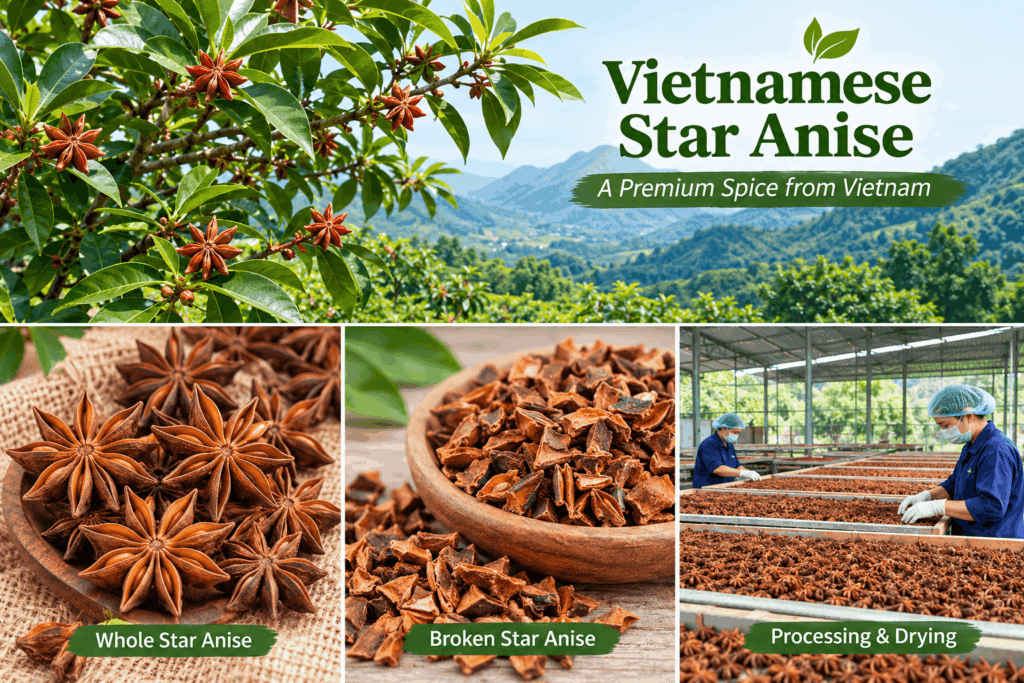

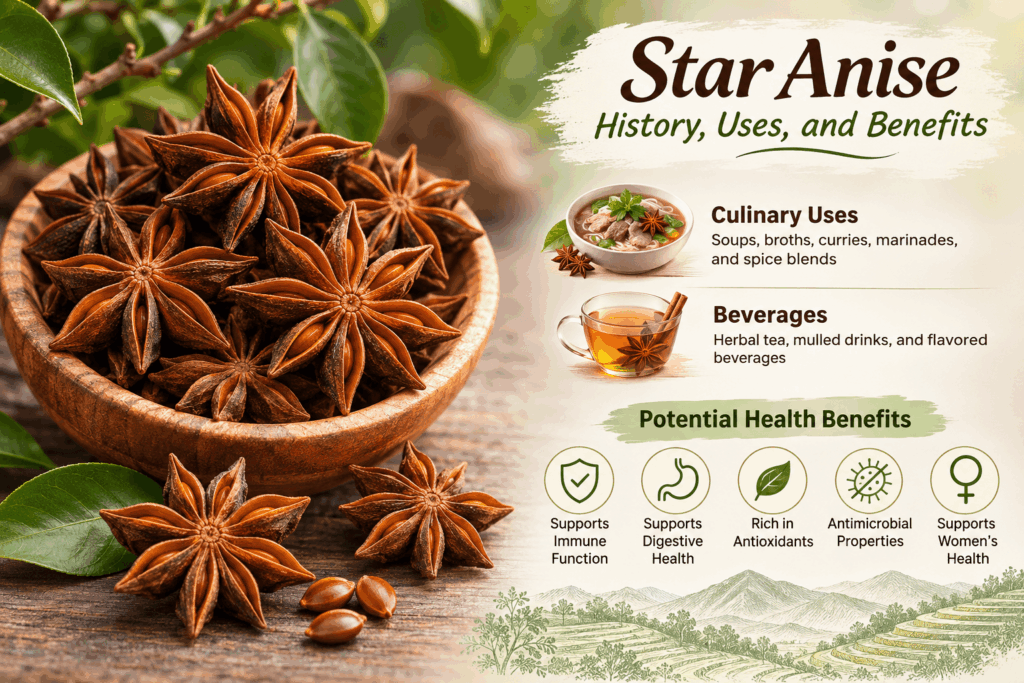
Star anise is a distinctive spice recognized by its beautiful star-shaped appearance, warm aroma, and sweet, licorice-like flavor. Scientifically known as Illicium verum, it is native to southern China and northern Vietnam and is widely used in Asian cuisine, traditional herbal practices, and the food processing industry.
Although often referred to as star anise seeds, the commercial spice is actually the dried fruit of the star anise tree. Its unique flavor and aromatic compounds make it an important ingredient in traditional dishes, beverages, and various food products.
Beyond its culinary applications, star anise has attracted scientific interest because it contains essential oils and other natural compounds with antioxidant and antimicrobial properties. Let’s explore its history, common uses, and potential health benefits.
History of Star Anise
Star anise has a long history in Asian culture, particularly in China and Vietnam. The plant is believed to have originated in southern China and northern Vietnam, where it has been cultivated and used for centuries.
Historical records indicate that star anise was already used as a culinary spice during China’s Song Dynasty (960–1279). By the Ming Dynasty (1368–1644), it was also documented in traditional Chinese medicine. Its distinctive aroma and sweet, warm flavor gradually made it an important ingredient in Asian cooking.
Star anise was introduced to Europe around the 16th or 17th century and subsequently became popular in European cuisine and beverage production.
Today, China and Vietnam are among the major producing countries. In Vietnam, star anise is particularly associated with northern mountainous provinces such as Lang Son, where it provides an important source of income for local farming communities.
Vietnamese star anise is widely traded internationally and used in food seasoning, spice manufacturing, essential oil production, and other industries.
Common Uses of Star Anise
Star anise is a versatile spice used in many culinary and commercial applications. Its distinctive sweet, warm, licorice-like flavor makes it suitable for both traditional recipes and modern food products.
Culinary Applications
Star anise is widely used in Asian cuisine to enhance the aroma and flavor of different dishes. It is a key ingredient in Chinese five-spice powder and is commonly added to soups, broths, curries, stews, and meat dishes.
In Vietnamese cuisine, star anise plays an important role in preparing traditional pho broth, contributing to its characteristic aroma and rich flavor.
It is also used in marinades, sauces, meat processing, and commercial seasoning blends. Food manufacturers often combine star anise with cinnamon, cloves, pepper, and other spices to create distinctive flavor profiles.
Tea and Beverage Applications
Star anise is commonly used to prepare herbal infusions and flavored beverages. Its naturally sweet, aromatic flavor makes it a popular ingredient in traditional teas and specialty drinks.
It can be added to hot water with cinnamon, ginger, or other spices to create warming herbal beverages. Star anise is also used to flavor mulled wine, liqueurs, and certain specialty alcoholic drinks.
In commercial beverage production, star anise extracts and essential oil may be used as flavoring ingredients, depending on product formulation and applicable food regulations.
Health Benefits of Star Anise
Star anise contains several natural compounds, including anethole, flavonoids, phenolic compounds, and other constituents found in its essential oil.
Scientific research has investigated these compounds for their potential antioxidant, antimicrobial, and anti-inflammatory activities. However, many findings come from laboratory or animal studies, and more human clinical research is needed to establish specific health benefits.
Supports Immune Function
Star anise contains natural plant compounds with antioxidant and antimicrobial activities. These compounds have attracted scientific interest because they may help protect cells against oxidative stress and inhibit certain microorganisms under laboratory conditions.
A balanced diet containing a variety of plant-based foods and spices can contribute to overall nutritional health. However, there is currently insufficient clinical evidence to conclude that consuming star anise directly strengthens the human immune system.
Supports Digestive Health
Star anise has traditionally been used in Asian herbal practices for digestive discomfort, including bloating and stomach-related complaints.
Its aromatic compounds have been investigated for their potential biological activities, which may help explain some of its traditional applications.
Star anise is also commonly used in meals and herbal infusions because of its distinctive aroma and flavor. Nevertheless, its effectiveness as a treatment for digestive disorders has not been firmly established through clinical studies.
Rich in Antioxidants
One of the most studied properties of star anise is its antioxidant potential.
It contains various natural compounds, including phenolic compounds and flavonoids, which have demonstrated antioxidant activity in experimental research. Antioxidants help neutralize free radicals, unstable molecules that can contribute to oxidative stress and cellular damage.
Including a variety of antioxidant-containing foods and spices in a balanced diet can support overall health. However, the specific health effects of consuming star anise require further human research.
Antimicrobial Properties
Star anise essential oil contains aromatic compounds, particularly trans-anethole, that have demonstrated antimicrobial activity in laboratory studies.
Research has investigated its potential ability to inhibit certain bacteria and fungi. These findings have generated interest in its possible applications in food preservation, natural flavoring, and other food-related industries.
However, laboratory results do not necessarily demonstrate the same effects in the human body. Star anise should not be considered a replacement for medical treatment or approved antimicrobial products.
Traditional Use and Women’s Health
Star anise has appeared in traditional herbal practices, and its natural compounds have been studied for various biological activities.
Some research has examined anethole and related compounds for possible estrogen-like activity. However, there is insufficient clinical evidence to establish that consuming star anise improves hormonal balance, menstrual health, fertility, or other aspects of women’s health.
Pregnant and breastfeeding women should seek professional medical advice before using concentrated star anise preparations or essential oils for medicinal purposes.
Frequently Asked Questions About Star Anise
1. What is star anise?
Star anise is the dried, star-shaped fruit of the Illicium verum tree. It is an aromatic spice known for its sweet, licorice-like flavor and is widely used in Asian cuisine, herbal infusions, and food manufacturing.
2. Where does star anise originate?
Star anise is native to southern China and northern Vietnam. Today, both countries are important producers and suppliers of star anise for domestic consumption and international markets.
3. What does star anise taste like?
Star anise has a sweet, warm, and slightly spicy flavor with a distinctive licorice-like aroma. Its flavor is mainly associated with the natural aromatic compound anethole.
4. What is star anise commonly used for?
Star anise is commonly used in soups, broths, curries, marinades, spice blends, herbal teas, beverages, and essential oil production. It is also an important ingredient in Chinese five-spice powder and Vietnamese pho seasoning.
5. Is star anise the same as anise seed?
No. Star anise and anise seed come from two different plants. Star anise is the dried fruit of Illicium verum, while anise seed comes from Pimpinella anisum. Although they share a similar licorice-like flavor, they differ in appearance, botanical classification, and growing conditions.
6. Can star anise be used to make tea?
Yes. Whole star anise can be steeped in hot water to prepare an aromatic herbal infusion. It is often combined with cinnamon, ginger, or other spices. However, star anise tea should not be given to infants, and only correctly identified, food-grade Chinese star anise should be used.
7. What is the difference between Chinese and Japanese star anise?
Chinese star anise (Illicium verum) is the edible spice commonly used in food preparation. Japanese star anise (Illicium anisatum) is toxic and must not be consumed. The two species can look similar, so proper botanical identification and quality control are essential.
8. Why is Vietnamese star anise popular in international markets?
Vietnamese star anise is valued for its distinctive aroma, characteristic flavor, and versatility in food seasoning and industrial applications. It is supplied in different grades and specifications to serve international food manufacturers, spice traders, and importers.