
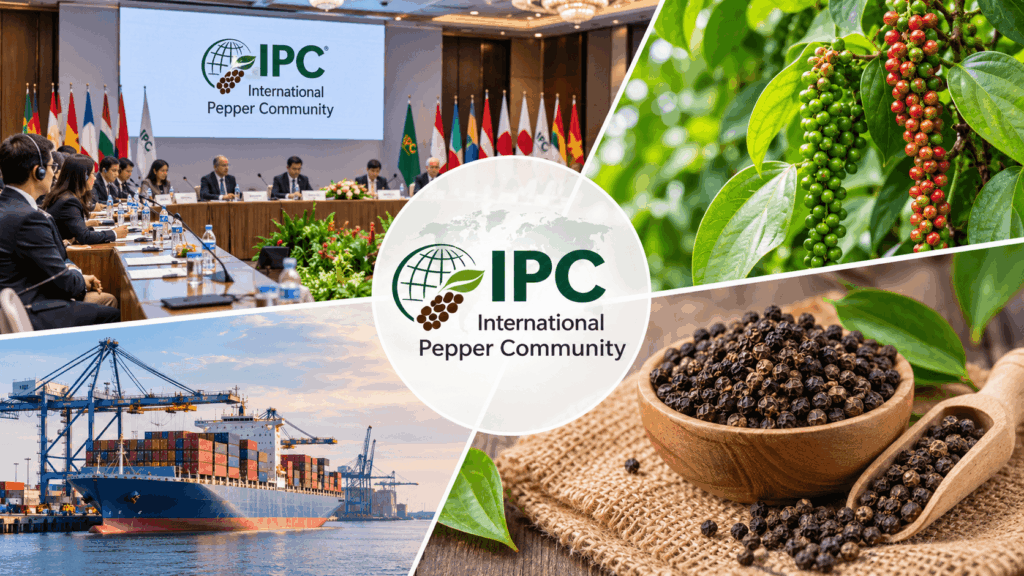
The global pepper industry plays an important role in international agricultural trade, connecting farmers, processors, exporters, importers and food manufacturers across different continents. Among the organizations supporting this industry, the International Pepper Community (IPC) stands out as an important intergovernmental platform dedicated to promoting cooperation, market development and sustainable growth in the global pepper sector.
Established in 1972, IPC brings together pepper-producing countries to address common challenges, exchange market information, encourage scientific research and strengthen international cooperation. Through its market reports, technical programs, trade promotion activities and industry meetings, the organization contributes to the development of the international pepper economy.
For pepper exporters, importers, wholesalers and other industry participants, understanding IPC and its activities provides valuable insights into global market trends, production developments and international trade opportunities.
1. What Is the International Pepper Community (IPC)?
The International Pepper Community (IPC) is an intergovernmental organization established to promote, coordinate and harmonize activities related to the global pepper economy.
The organization was established under the auspices of the United Nations Economic and Social Commission for Asia and the Pacific (UN-ESCAP). Its main purpose is to encourage cooperation among pepper-producing countries and support the development of the international pepper industry.
IPC provides a platform where governments, industry representatives, researchers and other stakeholders can exchange information, discuss industry challenges and develop strategies to improve pepper production, processing, marketing and international trade.
The organization focuses on several important areas:
- Promoting international cooperation among pepper-producing countries.
- Supporting research and technological development in pepper cultivation.
- Improving production efficiency and product quality.
- Monitoring global pepper production, consumption and trade.
- Providing market information and statistical data.
- Encouraging international trade and market expansion.
- Supporting cooperation in quality standards and trade facilitation.
Unlike commercial spice companies, IPC does not operate as a pepper exporter, importer or trading company. It serves as an international cooperation platform for the global pepper industry.
Basic Information About IPC
| Information | Details |
| Full Name | International Pepper Community |
| Abbreviation | IPC |
| Established | 1972 |
| Organization Type | Intergovernmental Organization |
| Main Industry | Pepper Production and Trade |
| Secretariat | Jakarta, Indonesia |
| Website | https://www.ipcnet.org/ |
| mail@ipcnet.org |
2. History and Development of the International Pepper Community
The establishment of IPC was driven by the need for greater cooperation among major pepper-producing countries. During the early 1970s, international pepper trade was becoming increasingly important, while producing countries faced common challenges involving production, pricing, market access and agricultural development.
Recognizing the importance of cooperation, representatives from several countries began discussions on establishing an international organization dedicated to the pepper industry.
The Agreement Establishing the Pepper Community was concluded in Bangkok, Thailand, on April 16, 1971, and entered into force on March 29, 1972.
At its Eighth Session in Cochin, India, in September 1980, the organization adopted the name International Pepper Community.
Over the following decades, IPC expanded its international cooperation and developed programs covering market intelligence, agricultural research, technical development and trade promotion.
Important Milestones in IPC History
1971 – Establishment Agreement
The agreement establishing the Pepper Community was concluded in Bangkok, Thailand, following intergovernmental consultations involving representatives of major pepper-producing countries.
1972 – Official Establishment
The agreement entered into force on March 29, 1972, marking the formal establishment of the organization.
1980 – Adoption of the IPC Name
During its Eighth Session in Cochin, India, the organization changed its name to the International Pepper Community.
1981 – Brazil Joins
Brazil joined the organization in 1981, strengthening cooperation between Asian and South American pepper-producing countries. Brazil subsequently withdrew in 2017.
2002 – Sri Lanka Joins
Sri Lanka joined IPC, further expanding international cooperation among major pepper-producing countries.
2005 – Vietnam Joins
Vietnam officially joined IPC on March 21, 2005, becoming an important participant in international cooperation within the pepper industry.
2022 – 50th Anniversary
IPC celebrated its 50th anniversary on April 16, 2022, marking five decades of cooperation and development in the global pepper industry.
2026 – A New Membership Development
According to the United Nations Treaty Collection, Vietnam notified the United Nations of its decision to withdraw from the Agreement on August 14, 2026. The withdrawal became effective on November 12, 2026.
These milestones reflect the development of IPC as an international platform supporting cooperation and growth in the global pepper economy.
3. Member Countries of the International Pepper Community
IPC was established to encourage cooperation among countries involved in pepper production and international trade.
Its membership has evolved over time as countries joined or withdrew from the agreement.
The United Nations Treaty Collection records the following parties to the agreement as of November 2026:
- Brazil
- India
- Indonesia
- Malaysia
- Sri Lanka
Papua New Guinea has also been recognized as an associate member under the agreement.
It is important to distinguish historical membership information from current treaty status. Although the IPC website may continue to display older membership information, the United Nations records Vietnam’s withdrawal as effective November 12, 2026.
Major Pepper-Producing Countries
Several countries play significant roles in global pepper production and international trade.
Vietnam
Vietnam has developed into one of the world’s most important black pepper-producing and exporting countries. Vietnamese pepper is supplied to numerous international markets and used by food manufacturers, spice distributors and processing companies.
India
India has a long history of pepper cultivation and consumption. The country is both a pepper-producing nation and an important market for international spice trade.
Indonesia
Indonesia is a major pepper-producing country, known for its black and white pepper varieties. Indonesian pepper is supplied to international food and spice markets.
Brazil
Brazil is an important pepper producer and exporter in South America, contributing to the diversification of global pepper supply.
Malaysia
Malaysia participates in international pepper production and trade, with Sarawak being an important pepper-producing region.
Sri Lanka
Sri Lanka has a long-standing agricultural tradition and produces pepper for both domestic consumption and international markets.
Cooperation among these countries helps strengthen the international pepper industry through information sharing, research and trade development.
4. Main Objectives and Functions of IPC
The International Pepper Community performs several important functions to support the development of the global pepper economy.
4.1. Promoting Agricultural Research and Development
Agricultural research is essential for maintaining productivity and improving the quality of pepper production.
IPC encourages cooperation in scientific and technical research related to pepper cultivation.
Research areas include:
- Developing high-yielding pepper varieties.
- Studying diseases affecting pepper plants.
- Improving resistance to pests and diseases.
- Enhancing cultivation techniques.
- Improving harvesting and post-harvest handling.
- Developing better processing technologies.
These activities aim to support farmers and producers in improving productivity, reducing production losses and maintaining consistent product quality.
4.2. Providing Global Pepper Market Information
Market intelligence is one of the most valuable resources provided by IPC.
The organization collects and publishes information about international pepper production, consumption, exports, imports and prices.
This information helps industry participants understand the overall market situation and make better business decisions.
Important market information includes:
- Global pepper production estimates.
- Export and import statistics.
- Domestic and international consumption.
- Pepper price movements.
- Supply and demand developments.
- Market outlook and industry trends.
For exporters and importers, these reports can provide useful background information when evaluating sourcing opportunities and international market conditions.
4.3. Encouraging International Trade and Market Expansion
IPC promotes cooperation between pepper-producing countries and supports initiatives designed to strengthen international pepper trade.
Its activities include:
- Encouraging trade cooperation.
- Identifying potential international markets.
- Promoting pepper consumption.
- Supporting participation in trade fairs and industry exhibitions.
- Discussing tariff and non-tariff trade barriers.
- Facilitating information exchange among industry stakeholders.
These initiatives contribute to stronger connections between producing countries and international markets.
4.4. Coordinating Quality Standards
Product quality is essential for international pepper trade.
IPC encourages cooperation in the development and coordination of quality standards to facilitate international marketing.
Quality-related topics include product specifications, processing practices, quality evaluation and issues affecting international market acceptance.
However, IPC is not a food safety certification body and does not replace internationally recognized certification systems such as ISO 22000, HACCP or other applicable food safety requirements.
4.5. Monitoring Pepper Prices and Market Fluctuations
Pepper prices can change due to various factors, including production volumes, weather conditions, inventories, export demand, transportation costs and market expectations.
IPC monitors developments in supply, demand and prices and provides information that helps industry participants understand these changes.
The organization also studies the causes and consequences of price fluctuations and encourages cooperation in addressing challenges affecting the global pepper economy.
5. Major Programs and Activities of IPC
IPC organizes various programs and activities to encourage international cooperation and improve the development of the pepper industry.
5.1. Annual Session
The Annual Session is one of the organization’s principal activities.
It brings together representatives from member countries to review the global pepper economy, discuss industry challenges and coordinate future programs.
Topics may include:
- Global pepper production.
- International trade developments.
- Supply and demand conditions.
- Market prices and industry outlook.
- Agricultural research.
- Quality and technical cooperation.
- International trade promotion.
The Annual Session provides an important platform for government representatives and industry stakeholders to exchange information and discuss strategies for the future of the pepper sector.
5.2. Peppertech Meeting
The Peppertech Meeting is a technical forum focusing on the economic and technological aspects of the pepper industry.
It addresses challenges related to production, processing, marketing and product development.
Common discussion areas include:
- Modern pepper cultivation methods.
- Pest and disease management.
- Agricultural productivity.
- Processing technology.
- Product development.
- Research and innovation.
The meeting encourages the exchange of scientific findings and practical experience among participating countries.
5.3. Meeting of Pepper Exporters
The Meeting of Pepper Exporters provides a platform for discussing international pepper trade and market developments.
Participants can exchange information regarding:
- Current production conditions.
- Domestic consumption.
- Export and import performance.
- International pepper prices.
- Market opportunities.
- Transportation and logistics.
- Challenges affecting international trade.
These discussions are particularly relevant to exporters, importers and other businesses operating in the international pepper supply chain.
5.4. Trade Fairs and International Exhibitions
IPC also participates in trade fairs and industry-specific exhibitions to promote pepper consumption and encourage international business cooperation.
Such activities help connect producing countries with potential buyers and provide opportunities to introduce pepper products to new markets.
For smaller businesses, participation through an international industry platform can provide greater exposure and opportunities to connect with overseas partners.
6. IPC Market Reports and Publications
One of the most useful aspects of IPC for international pepper businesses is its market information and publication system.
The organization publishes different types of reports covering price movements, market conditions, trade statistics and industry developments.
6.1. Weekly Prices Bulletin
The Weekly Prices Bulletin provides information about international pepper price trends.
According to IPC’s publication description, the bulletin includes:
- Current prices at major producing origins.
- Prevailing spot prices.
- Futures prices at major trading centers.
- International market developments.
- Selected trade information.
The bulletin is published every Friday according to the IPC publication schedule.
For pepper exporters and importers, weekly price information can provide a useful reference when monitoring market developments and preparing commercial quotations.
6.2. Pepper News & Market Review
Pepper News & Market Review provides industry-related news and an overview of market conditions during the previous month.
Its content may cover:
- Developments in major producing countries.
- International pepper market trends.
- Price movements.
- Production and supply conditions.
- Export and import developments.
- Important industry news.
This publication helps readers maintain a broader understanding of the international pepper market.
6.3. Focus on Pepper
Focus on Pepper is a technical publication covering different aspects of the pepper industry.
It includes information and articles related to:
- Pepper cultivation.
- Production technology.
- Processing methods.
- Product development.
- Scientific research.
- Selected trade statistics.
The publication provides useful technical information for agricultural researchers, producers and industry professionals.
6.4. Global Pepper Market Reports
IPC also publishes broader market reports reviewing the global pepper economy.
These reports examine developments in major producing countries and evaluate factors influencing international supply and demand.
For example, the Global Pepper Market Report Annual Review 2025 and Outlook 2026 discusses the global market environment, including supply constraints, production developments, inventories, compliance requirements and logistics costs.
These reports can help businesses understand the broader context behind international pepper price movements.
7. IPC’s Digital Tools and Market Intelligence Projects
In addition to its publications, IPC provides several digital tools and information resources designed to support industry participants.
7.1. Crop Report Analytics
Crop Report Analytics is a visual tool designed to analyze developments in:
- Pepper production.
- Export performance.
- Domestic consumption.
- Price movements.
It helps users examine market trends and compare developments across different reporting periods.
7.2. Export Trends
Export Trends provides information and visual analysis of international pepper export developments.
This resource can help businesses understand changes in export performance and identify important developments in the global pepper trade.
7.3. Rejection Reports
Rejection Reports compile information about pepper consignments rejected or subject to alerts in the United States and European Union.
This resource is particularly relevant to exporters because it helps highlight potential issues affecting international shipments.
Topics of interest may include food safety, contamination and regulatory compliance.
Exporters should use the information as a research reference and verify specific requirements with the relevant importing-country authorities.
7.4. DIREX: Country Regulations
DIREX is a database focusing on regulations followed by importing countries.
For international spice exporters, understanding destination-market requirements is essential before shipping products.
Regulatory research can help businesses review applicable requirements and reduce the risk of shipment delays or rejection.
7.5. Training Videos and Research Resources
IPC also provides educational resources and training videos related to pepper cultivation.
These materials support knowledge sharing and encourage improvements in agricultural practices.
The organization’s research and development resources also highlight technical findings and developments from participating countries.
8. Why IPC Is Important to International Pepper Exporters and Importers
The global pepper supply chain involves multiple participants, including farmers, processors, exporters, importers, wholesalers, distributors and food manufacturers.
Access to reliable market information and industry knowledge is important for businesses operating in this competitive environment.
IPC offers several useful resources for these participants.
8.1. Understanding Global Pepper Prices
International pepper prices are influenced by production levels, weather conditions, inventories, demand and export availability.
By monitoring IPC price reports, businesses can gain additional insight into market developments.
This information can support purchasing decisions, supplier negotiations and export quotation strategies.
8.2. Identifying International Market Opportunities
Market reports and trade information can help businesses evaluate the development of pepper demand across different countries.
Importers and distributors can use this information to understand supply origins and market conditions.
Exporters can also use market intelligence to identify potential destinations for their products.
8.3. Improving Export Quality and Compliance
International buyers increasingly pay attention to food safety, product specifications, traceability and regulatory compliance.
Resources such as IPC’s Rejection Reports and DIREX database can help exporters identify potential regulatory and quality-related risks.
However, businesses must always verify applicable requirements with the official authorities of their destination markets.
8.4. Building International Business Connections
IPC’s international meetings and industry events provide opportunities for participants to exchange information and develop professional relationships.
Such activities can support cooperation between producers, exporters, importers and other stakeholders in the global pepper industry.
9. The Role of IPC in the Future of the Global Pepper Industry
The international pepper industry continues to face important challenges and opportunities.
Changes in weather patterns, agricultural productivity, international demand, logistics costs and food safety regulations can significantly influence the global pepper supply chain.
Several areas are likely to remain important for the industry’s future development.
Sustainable Pepper Production
Improving agricultural practices and protecting natural resources are important for maintaining long-term production.
Agricultural Innovation
Research into disease-resistant varieties, improved cultivation techniques and modern processing technologies can help increase productivity.
Food Safety and Quality
International buyers increasingly require consistent product quality, appropriate processing practices and compliance with destination-market regulations.
Market Transparency
Reliable information about production, exports, imports and prices is essential for improving decision-making across the supply chain.
International Cooperation
Cooperation among producing countries can support knowledge sharing, market development and solutions to common industry challenges.
Through its research programs, publications and international activities, IPC continues to provide a platform for addressing these developments.
10. How Spice Exporters Can Benefit from IPC
For companies involved in the international spice trade, IPC is a useful source of industry information, particularly for businesses specializing in black pepper.
Exporters can benefit from the organization’s resources in several practical ways:
- Monitor market prices: Follow weekly pepper price reports to understand market movements and support export pricing decisions.
- Research producing countries: Compare market developments across major pepper origins to better understand international supply conditions.
- Study export trends: Review available trade statistics to evaluate the performance of different producing countries.
- Understand import regulations: Explore available regulatory information and verify destination-market requirements before exporting.
- Improve product compliance: Study rejection information to identify potential risks related to international shipments.
- Expand business networks: Follow IPC meetings and international industry events to identify opportunities for cooperation.
For exporters of black pepper and other agricultural commodities, combining IPC market information with direct customer research, trade statistics and regulatory updates can support more informed business decisions.
11. Official IPC Website and Contact Information
Businesses, researchers and industry professionals can visit the official IPC website to explore its publications, market reports, programs and industry news.
International Pepper Community (IPC)
Website: https://www.ipcnet.org/
Email: mail@ipcnet.org
Secretariat Address:
8th Floor, BAPPEBTI Building,
Jl. Kramat Raya No. 172,
Jakarta Pusat 10430,
Indonesia.
The official website provides access to market reports, international pepper industry information, research resources and updates about the organization’s activities.
Conclusion
The International Pepper Community (IPC) has played an important role in promoting international cooperation and supporting the development of the global pepper industry since its establishment in 1972.
Through its market publications, research initiatives, technical meetings, trade promotion activities and digital information resources, IPC provides valuable information for governments, researchers and businesses involved in pepper production and international trade.
For pepper exporters, importers, wholesalers and spice manufacturers, understanding IPC’s activities can provide useful insights into global market developments, price trends, trade opportunities and regulatory challenges.
As the international pepper industry continues to evolve, reliable market information, consistent product quality and strong business relationships will remain essential factors for long-term success.