
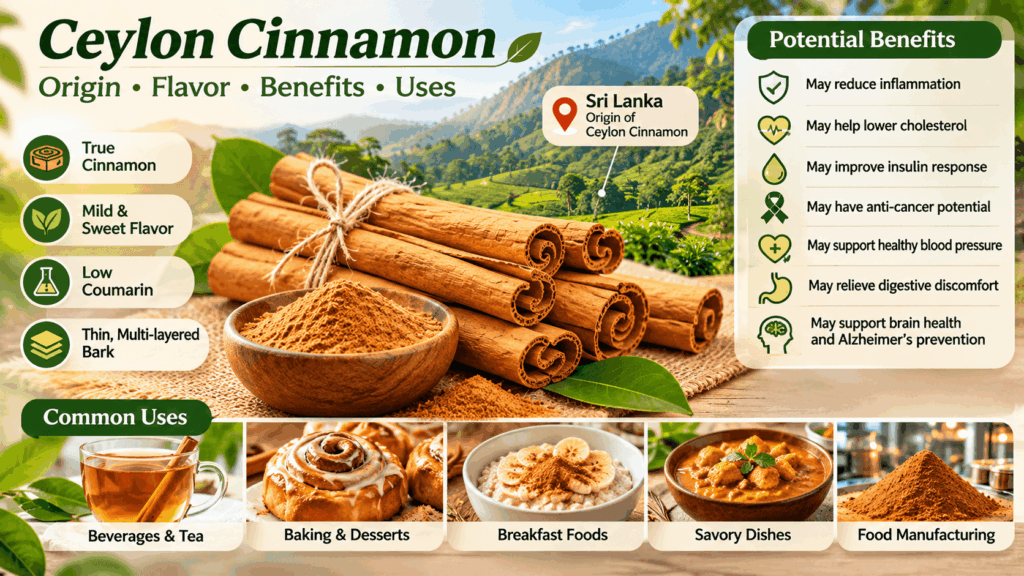
Ceylon Cinnamon, widely known as true cinnamon, is one of the world’s most distinctive and highly valued spices. Recognized for its delicate aroma, mildly sweet flavor, and thin, layered bark, it has been used for centuries in cooking, traditional practices, and various food applications. Native to Sri Lanka, Ceylon cinnamon has earned an international reputation for its quality and unique characteristics.
Beyond its culinary appeal, Ceylon cinnamon contains naturally occurring plant compounds that have attracted scientific interest. Researchers have explored its potential antioxidant, anti-inflammatory, and metabolic effects, although many proposed health benefits still require stronger clinical evidence.
In this article, we explore the origin, flavor, nutritional information, potential health benefits, supplements, side effects, and uses of Ceylon cinnamon to help you understand this popular spice.
Overview of Ceylon Cinnamon
Ceylon cinnamon is a spice obtained from the inner bark of the Cinnamomum verum tree, also known by its former botanical name, Cinnamomum zeylanicum. It belongs to the Lauraceae family and is commonly referred to as true cinnamon because of its long-established association with Sri Lanka.
Unlike many other commercial cinnamon varieties, Ceylon cinnamon is characterized by its light brown color, thin bark, delicate texture, and complex yet gentle aroma. Its mild sweetness and subtle citrus notes make it suitable for both sweet and savory recipes.
One of its most notable characteristics is its naturally low coumarin content compared with Cassia cinnamon. Coumarin is a naturally occurring compound that may cause liver-related concerns when consumed in excessive amounts over long periods. This difference is one reason why Ceylon cinnamon is often preferred by consumers looking for a cinnamon variety with lower coumarin levels.
Origin of Ceylon Cinnamon
Ceylon cinnamon originates from Sri Lanka, an island nation in South Asia historically known as Ceylon. The country is widely recognized as the traditional home of true cinnamon, where the spice has been cultivated and traded for centuries.
The botanical species Cinnamomum verum is native to Sri Lanka and grows particularly well in its tropical climate. Warm temperatures, suitable rainfall, and local growing conditions contribute to the development of cinnamon trees with distinctive aromatic properties.
Historically, Sri Lankan cinnamon was an important international trading commodity. Its popularity attracted European traders, including the Portuguese, Dutch, and British, who played significant roles in the development of the cinnamon trade and commercial cultivation.
Today, Sri Lanka remains strongly associated with the production of authentic Ceylon cinnamon. Although the tree has also been introduced to other tropical regions, Sri Lankan cinnamon continues to hold a distinctive position in the global spice market.
Flavor and Characteristics of Ceylon Cinnamon
The flavor of Ceylon cinnamon is one of the main reasons it is appreciated by chefs, food manufacturers, and spice enthusiasts.
Compared with the stronger and more pungent taste of many Cassia varieties, Ceylon cinnamon has a mildly sweet, delicate, and warm flavor, accompanied by subtle citrus and honey-like notes. Its aroma is pleasant and refined, making it suitable for recipes where a balanced cinnamon flavor is preferred.
Its physical characteristics also distinguish it from other cinnamon varieties:
- Color: Light brown to slightly reddish-brown.
- Texture: Thin, soft, delicate, and papery.
- Bark structure: Multiple thin layers rolled together to form a quill.
- Aroma: Sweet, warm, delicate, with subtle citrus notes.
- Flavor: Mildly sweet, smooth, and less pungent than Cassia cinnamon.
- Coumarin content: Naturally very low compared with most Cassia varieties.
These characteristics make Ceylon cinnamon sticks, Ceylon cinnamon powder, and other processed forms valuable ingredients in the food and beverage industry.
Health Benefits of Ceylon Cinnamon
Ceylon cinnamon benefits have attracted increasing scientific interest because the spice contains various naturally occurring compounds, including cinnamaldehyde, polyphenols, and other antioxidants.
Laboratory and animal studies have investigated its potential effects on inflammation, blood sugar regulation, cardiovascular health, and other biological processes. Some human studies have also explored these effects, but the overall evidence remains limited for several proposed health benefits.
It is important to understand that Ceylon cinnamon is a food ingredient, not a proven treatment or cure for medical conditions.
May Help Reduce Inflammation
Inflammation is a natural response of the immune system to injury, infection, or harmful substances. However, long-term or chronic inflammation may contribute to various health problems.
Ceylon cinnamon contains antioxidant and anti-inflammatory compounds, including polyphenols and cinnamaldehyde. Laboratory research suggests that some of these compounds may influence biological pathways associated with inflammation and oxidative stress.
These findings have encouraged further investigation into the potential role of cinnamon in supporting overall health. However, more well-designed human studies are needed to establish whether consuming Ceylon cinnamon can meaningfully reduce inflammation in the body.
May Help Improve Cholesterol Levels
Cholesterol is a type of fat found in the blood. While the body needs cholesterol for important functions, elevated levels of LDL cholesterol may increase the risk of cardiovascular disease.
Some studies have investigated whether cinnamon supplementation may influence cholesterol levels and other blood lipid markers.
A clinical trial involving healthy adults found reductions in total cholesterol and LDL cholesterol following the use of a Ceylon cinnamon extract over three months. However, the study involved a relatively small number of participants, so its findings should not be considered conclusive.
Ceylon cinnamon may have potential cardiovascular benefits, but further research involving larger populations is necessary to confirm its effects on cholesterol management.
May Improve Insulin Response
Insulin is a hormone produced by the pancreas that helps regulate blood glucose levels by allowing cells to absorb and use glucose for energy.
Some laboratory studies suggest that compounds found in cinnamon may influence insulin signaling and glucose metabolism.
A randomized, placebo-controlled clinical trial published in 2025 investigated Ceylon cinnamon extract in people with type 2 diabetes. The results reported improvements in fasting blood glucose and HbA1c in the cinnamon groups, alongside changes in measures of insulin resistance. Nevertheless, further research is needed to establish long-term effectiveness and safety.
These findings suggest that Ceylon cinnamon may support healthy glucose metabolism, but it should never replace prescribed diabetes medication, medical advice, or an appropriate treatment plan.
May Have Potential Anti-Cancer Properties
Certain compounds found in cinnamon have demonstrated antioxidant and biological activities in laboratory experiments. Researchers have investigated whether these compounds may influence processes associated with cancer cell growth.
Some preclinical studies suggest that cinnamon extracts and individual compounds may affect cancer-related pathways. However, laboratory findings do not establish that consuming cinnamon can prevent or treat cancer in humans.
At present, there is insufficient clinical evidence to recommend Ceylon cinnamon as a cancer prevention or treatment method. People undergoing cancer treatment should consult their healthcare providers before using concentrated cinnamon extracts or supplements.
May Help Support Healthy Blood Pressure
Blood pressure measures the force of blood against the walls of the arteries. Maintaining healthy blood pressure is important for cardiovascular health.
Some research has explored the potential effects of cinnamon on blood pressure. A small clinical trial involving healthy adults reported reductions in systolic and diastolic blood pressure after three months of Ceylon cinnamon extract supplementation.
However, this result needs confirmation through larger and longer clinical trials. The evidence is not yet strong enough to establish Ceylon cinnamon as an effective treatment for hypertension.
Ceylon cinnamon may contain compounds worth investigating for cardiovascular health, but it should not replace prescribed blood pressure medication or professional medical care.
May Help Relieve Digestive Discomfort
Cinnamon has a long history of use in traditional food practices and herbal preparations for digestive discomfort.
Its naturally occurring aromatic compounds have been investigated for their potential antimicrobial and gastrointestinal effects. Some early research suggests that cinnamon compounds may influence digestive processes and certain microorganisms.
However, there is not enough reliable clinical evidence to confirm that Ceylon cinnamon can treat digestive disorders or consistently relieve intestinal discomfort.
Using small amounts of Ceylon cinnamon in everyday meals and beverages can add flavor, but people experiencing persistent digestive symptoms should seek appropriate medical advice.
May Have Potential Benefits for Brain Health and Alzheimer’s Disease
Alzheimer’s disease is a progressive neurological condition that affects memory, thinking, and other cognitive functions.
Researchers have investigated cinnamon compounds for their potential antioxidant and neuroprotective properties. Certain laboratory and animal studies suggest that cinnamon may influence oxidative stress and the formation of protein structures associated with Alzheimer’s disease.
However, these findings are still preliminary. There is currently no convincing human clinical evidence demonstrating that consuming Ceylon cinnamon can prevent Alzheimer’s disease, slow cognitive decline, or treat dementia.
Further research is required to understand whether its bioactive compounds could have meaningful applications in supporting brain health.
Nutritional Information of Ceylon Cinnamon
Ceylon cinnamon contains small amounts of several nutrients, including dietary fiber, calcium, iron, manganese, and other minerals. However, it is generally consumed in small quantities as a spice rather than as a major source of daily nutrition.
The following table provides approximate nutritional values for one teaspoon of ground cinnamon (about 2.6 grams). These figures are based on a general USDA ground cinnamon reference and should not be interpreted as a laboratory analysis specific to Ceylon cinnamon.
| Nutrient | Approximate amount per teaspoon |
| Calories | 6 kcal |
| Total fat | 0.03 g |
| Carbohydrates | 2.1 g |
| Dietary fiber | 1.4 g |
| Sugars | 0.1 g |
| Protein | 0.1 g |
| Calcium | 26 mg |
| Iron | 0.2 mg |
| Potassium | 11 mg |
| Sodium | Less than 1 mg |
The exact nutritional composition may vary depending on the cinnamon species, growing conditions, processing methods, and serving size.
Although Ceylon cinnamon contains beneficial plant compounds, its nutritional contribution should be considered alongside a balanced and varied diet.
Ceylon Cinnamon Supplements
Ceylon cinnamon supplements are available in different forms, including capsules, tablets, powders, and liquid extracts. These products are often marketed for their potential antioxidant properties and possible effects on blood sugar and cardiovascular health.
Unlike ordinary culinary cinnamon, supplements may contain concentrated extracts designed to provide specific amounts of cinnamon compounds.
Before choosing a supplement, consumers should consider several factors:
- Botanical identification: Check whether the product specifically identifies Cinnamomum verum or Cinnamomum zeylanicum as its source.
- Ingredient transparency: Review the ingredient list and the amount of cinnamon extract per serving.
- Quality assurance: Look for reliable manufacturers and appropriate quality-testing information.
- Product labeling: Check the recommended serving instructions, warnings, and expiration date.
- Third-party testing: Where available, consider products that provide independent testing for identity, purity, and contaminants.
Although some clinical studies have reported promising findings, the available evidence does not establish a standard supplement dose or prove that Ceylon cinnamon supplements can treat a particular health condition.
People with diabetes, liver conditions, or other medical concerns, as well as those taking regular medication, should consult a healthcare professional before using concentrated cinnamon supplements.
Side Effects of Cinnamon
Ceylon cinnamon is generally considered safe when consumed in normal food amounts. However, using large quantities or concentrated supplements may increase the possibility of unwanted effects.
Potential side effects and precautions include:
- Digestive discomfort: Some people may experience stomach irritation, nausea, or digestive discomfort when consuming large amounts.
- Allergic reactions: Although uncommon, cinnamon may cause allergic reactions or skin irritation in sensitive individuals.
- Medication interactions: Cinnamon products may interact with certain medicines. People taking regular medication should seek professional advice before using concentrated supplements.
- Pregnancy and breastfeeding: Culinary amounts are different from concentrated supplements. The safety of consuming large supplemental amounts during pregnancy or breastfeeding has not been established.
- Liver-related considerations: Ceylon cinnamon naturally contains very little coumarin compared with Cassia cinnamon. However, product identity and composition should still be checked, particularly when supplements are used regularly.
One important difference between Ceylon cinnamon and Cassia cinnamon is their coumarin content. Cassia varieties can contain considerably higher levels of coumarin, a compound associated with potential liver concerns when consumed in excessive amounts over time.
For most people, using Ceylon cinnamon as a normal culinary spice is a practical way to enjoy its flavor without relying on concentrated supplements.
How to Use Ceylon Cinnamon
Ceylon cinnamon is a versatile spice used in many cuisines around the world. Its mild sweetness, warm aroma, and delicate flavor make it suitable for a wide range of food and beverage applications.
Here are some common ways to use Ceylon cinnamon sticks and powder:
1. Beverages and Tea
Ceylon cinnamon sticks can be added to hot water, herbal tea, coffee, and other beverages. They provide a gentle aromatic flavor that complements ingredients such as honey, ginger, lemon, and milk.
2. Baking and Desserts
Ground Ceylon cinnamon is widely used in cakes, cookies, pastries, bread, puddings, and other desserts. Its mild sweetness enhances the flavor of baked goods without overpowering other ingredients.
3. Breakfast Foods
A small amount of Ceylon cinnamon powder can be sprinkled over oatmeal, yogurt, cereal, pancakes, or fresh fruit to add warmth and aroma.
4. Savory Dishes
Ceylon cinnamon is also used in selected savory recipes, including curries, rice dishes, soups, stews, and meat preparations. It pairs well with ingredients such as cloves, cardamom, nutmeg, and black pepper.
5. Spice Blends and Food Manufacturing
In the food industry, Ceylon cinnamon is used in seasoning blends, bakery mixes, confectionery, sauces, beverages, and various processed food products.
Its delicate flavor profile makes it a useful ingredient for manufacturers looking to create balanced and aromatic formulations.
Frequently Asked Questions About Ceylon Cinnamon
1. What is Ceylon cinnamon?
Ceylon cinnamon is a type of cinnamon obtained from the inner bark of the Cinnamomum verum tree. It is native to Sri Lanka and is commonly known as true cinnamon.
2. Why is Ceylon cinnamon called true cinnamon?
Ceylon cinnamon is commonly called true cinnamon because it comes from the botanical species Cinnamomum verum, traditionally associated with Sri Lanka. It is botanically distinct from Cassia cinnamon varieties.
3. What is the difference between Ceylon cinnamon and Cassia cinnamon?
The main differences involve botanical origin, bark structure, flavor, and chemical composition.
Ceylon cinnamon generally has thin, soft, multi-layered bark, a delicate sweet flavor, and very low coumarin content. Cassia cinnamon typically has thicker, harder bark, a stronger and more pungent flavor, and higher coumarin levels.
4. Is Ceylon cinnamon better than Cassia cinnamon?
Neither variety is universally better for every application. Ceylon cinnamon is often preferred for its delicate flavor and low coumarin content, while Cassia cinnamon is widely used for its stronger flavor and commercial availability.
The best choice depends on the intended application, flavor preference, product specifications, and consumer requirements.
5. Can Ceylon cinnamon be consumed every day?
Ceylon cinnamon is generally considered safe when used in normal culinary quantities. However, consuming large amounts or taking concentrated supplements regularly requires additional caution. People with medical conditions or those taking medication should consult a healthcare professional.
6. Does Ceylon cinnamon contain coumarin?
Yes, but Ceylon cinnamon naturally contains only trace amounts of coumarin compared with most Cassia varieties. This is one of its important chemical characteristics.
7. What are the common forms of Ceylon cinnamon?
Common commercial forms include:
- Ceylon cinnamon quills: Whole rolled cinnamon bark.
- Ceylon cinnamon sticks: Cinnamon quills cut into shorter lengths.
- Ceylon cinnamon powder: Finely ground cinnamon bark.
- Ceylon cinnamon chips: Small pieces of cinnamon bark.
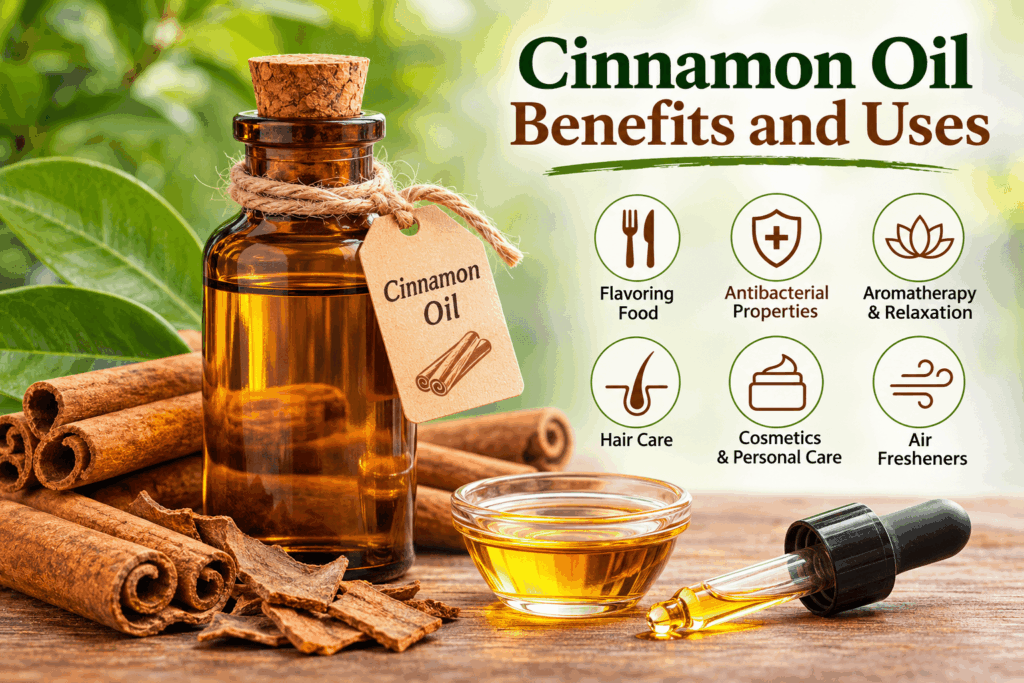
- Ceylon cinnamon essential oil: An aromatic oil produced from cinnamon plant materials.
These forms are used in food production, beverages, seasoning blends, and other applications.
Conclusion
Ceylon cinnamon is a distinctive spice with a long history, a delicate sweet flavor, and a strong association with Sri Lanka. Its thin, layered bark, refined aroma, and naturally low coumarin content distinguish it from many other commercial cinnamon varieties.
Beyond its culinary applications, Ceylon cinnamon contains bioactive compounds that continue to attract scientific interest. Although preliminary research has explored potential benefits related to inflammation, cholesterol, blood glucose, and cardiovascular health, more high-quality human studies are needed before these effects can be established.
Today, Ceylon cinnamon sticks, powder, and extracts are used in a wide range of food and beverage products. Understanding its origin, characteristics, quality, and applications helps consumers and food manufacturers make informed choices when selecting this valued spice.