
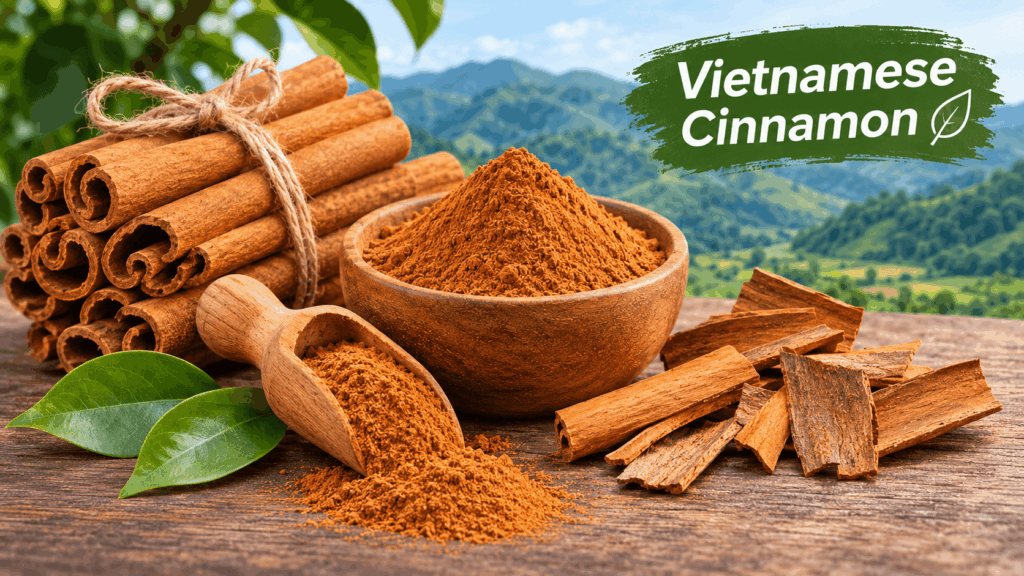
Vietnamese Cinnamon, widely known as Vietnamese Cassia Cinnamon, is one of the distinctive spices produced in Southeast Asia. Recognized for its rich aroma, warm and sweet-spicy flavor, and naturally reddish-brown bark, Vietnamese cinnamon is widely used in cooking, food manufacturing, and international spice trading.
Grown in Vietnam’s tropical and mountainous regions, Vietnamese cinnamon has become an important agricultural product supplied to international markets. Its characteristic flavor and versatile commercial forms make it a valuable ingredient for food manufacturers, spice distributors, wholesalers, and importers.
Beyond its culinary applications, Vietnamese cinnamon contains naturally occurring plant compounds, including cinnamaldehyde and polyphenols, that have attracted scientific interest. However, proposed health benefits should be interpreted carefully, as further clinical research is needed to establish their effects in humans.
In this article, we explore the origin, flavor, characteristics, potential health benefits, nutritional information, side effects, and uses of Vietnamese cinnamon.
Overview of Vietnamese Cinnamon
Vietnamese cinnamon is a commercial variety of Cassia cinnamon, commonly associated with the botanical species Cinnamomum loureiroi. It belongs to the Lauraceae family and is valued for its strong aromatic properties and distinctive flavor.
Compared with Ceylon cinnamon, Vietnamese Cassia generally has a stronger, warmer, and more pungent taste. Its bark is typically thicker and harder, with a reddish-brown to dark brown appearance.
One of its notable characteristics is its naturally high cinnamaldehyde content, the aromatic compound largely responsible for cinnamon’s characteristic smell and flavor. This makes Vietnamese cinnamon particularly suitable for applications that require a pronounced cinnamon profile.
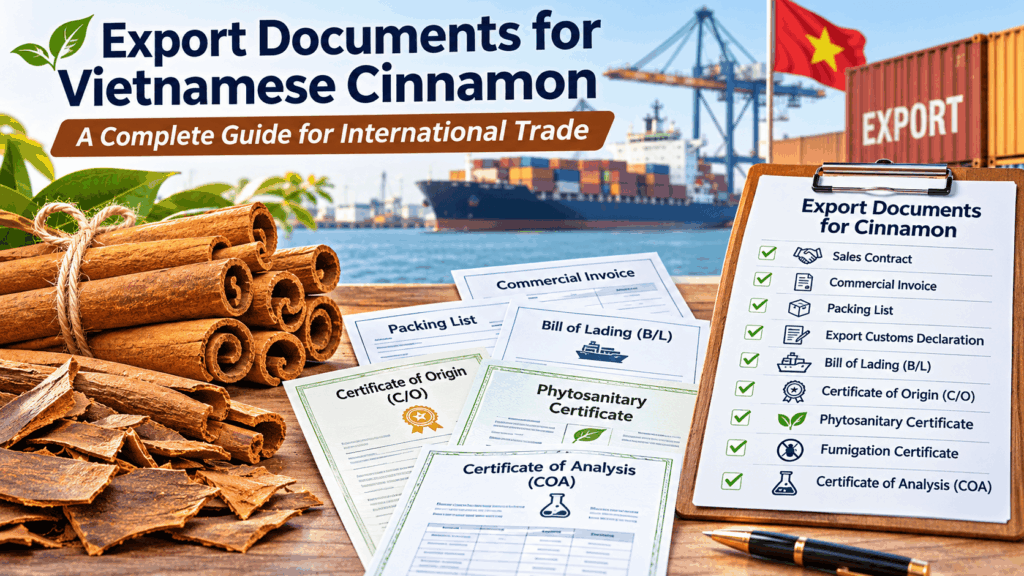
Vietnamese cinnamon is commercially available in several forms, including cinnamon sticks, split cinnamon, broken cinnamon, whole tube cinnamon, pressed cinnamon, round-cut cinnamon, square-cut cinnamon, and cinnamon powder.
Origin of Vietnamese Cinnamon
Vietnam has favorable natural conditions for growing cinnamon trees, particularly in mountainous areas with tropical and subtropical climates. Important cinnamon-growing regions include Yen Bai, Lao Cai, Quang Ninh, and other northern and central provinces.
Yen Bai is widely recognized as one of Vietnam’s important cinnamon-producing regions. Its mountainous terrain, suitable rainfall, and local agricultural practices support the cultivation of cinnamon trees.
Vietnamese cinnamon has a long history of cultivation and traditional use. Local communities have developed experience in growing, harvesting, peeling, drying, and processing cinnamon bark for domestic consumption and international trade.
Today, Vietnamese cinnamon is supplied to various global markets, serving food manufacturers, spice wholesalers, importers, and distributors. Its different commercial grades and product forms allow buyers to select materials according to their processing requirements.
Flavor and Characteristics of Vietnamese Cinnamon
The flavor of Vietnamese cinnamon is one of the main reasons it is recognized in the international spice market.
Compared with the delicate and mildly sweet flavor of Ceylon cinnamon, Vietnamese Cassia has a stronger, warmer, and more intense taste. It offers a characteristic sweet-spicy profile with a rich aroma that works well in both sweet and savory recipes.
Its physical characteristics also distinguish it from other cinnamon varieties:
- Color: Reddish-brown to dark brown.
- Texture: Relatively thick, firm, and woody bark.
- Bark structure: Available as rolled sticks, split pieces, broken bark, and other processed forms.
- Aroma: Strong, warm, sweet, and aromatic.
- Flavor: Rich, sweet-spicy, and more pungent than Ceylon cinnamon.
- Cinnamaldehyde: A naturally occurring aromatic compound that contributes to its characteristic fragrance.
- Coumarin content: Generally higher than Ceylon cinnamon, although levels vary depending on species, origin, and product batch.
These characteristics make Vietnamese cinnamon sticks, cassia cinnamon powder, and other processed forms valuable ingredients for the food and beverage industry.
Health Benefits of Vietnamese Cinnamon
Vietnamese cinnamon contains naturally occurring plant compounds, including cinnamaldehyde, polyphenols, and other antioxidant substances.
Scientific research has investigated cinnamon compounds for their potential antioxidant, anti-inflammatory, and metabolic effects. However, much of the available evidence comes from laboratory and animal studies, and findings from research on cinnamon extracts or other species cannot automatically be applied to Vietnamese Cassia.
Vietnamese cinnamon is primarily a culinary spice, not a proven treatment or cure for medical conditions.
May Have Antioxidant Properties
Antioxidants are substances that help protect cells against oxidative stress caused by unstable molecules known as free radicals.
Cinnamon contains naturally occurring polyphenols and other compounds that have demonstrated antioxidant activity in laboratory research.
These compounds have attracted scientific interest because oxidative stress is associated with several biological processes. However, further human studies are needed to determine the practical effects of consuming Vietnamese cinnamon as part of a normal diet.
May Help Support Healthy Blood Sugar Metabolism
Some studies have investigated whether cinnamon compounds may influence glucose metabolism and insulin-related processes.
Laboratory research suggests that certain cinnamon compounds may affect pathways involved in blood glucose regulation. Some human studies involving cinnamon supplementation have also reported changes in blood glucose measurements.
However, research findings are mixed, and results may differ according to cinnamon species, preparation, dosage, and study design.
Vietnamese cinnamon should not replace prescribed diabetes medication, medical advice, or an appropriate treatment plan.
May Have Anti-Inflammatory Potential
Inflammation is a natural response of the immune system to injury, infection, or other harmful substances. Long-term inflammation has been associated with various health conditions.
Certain cinnamon compounds, including cinnamaldehyde and polyphenols, have demonstrated potential anti-inflammatory activity in laboratory studies.
These findings have encouraged further research into cinnamon’s biological properties. Nevertheless, more well-designed human studies are required to establish whether consuming Vietnamese cinnamon can meaningfully influence inflammation in the body.
May Support Cardiovascular Health
Some research has explored the potential relationship between cinnamon consumption and cardiovascular markers, including cholesterol and blood pressure.
Certain studies involving cinnamon supplementation have reported changes in blood lipid levels and other cardiovascular measurements. However, the available evidence is not sufficient to establish cinnamon as an effective treatment for high cholesterol or hypertension.
Maintaining cardiovascular health requires a balanced diet, regular physical activity, and appropriate medical care.
May Have Antimicrobial Properties
Cinnamon essential oil and its naturally occurring compounds have been investigated for their potential antimicrobial activity.
Laboratory studies suggest that compounds such as cinnamaldehyde may inhibit the growth of certain microorganisms under specific experimental conditions.
These findings have attracted interest from food scientists and food manufacturers exploring natural ingredients for food formulations. However, laboratory results do not establish that consuming cinnamon can prevent or treat infections.
Nutritional Information of Vietnamese Cinnamon
Vietnamese cinnamon contains small amounts of dietary fiber, minerals, and naturally occurring plant compounds. These include calcium, iron, manganese, and polyphenols.
Because cinnamon is generally consumed in small quantities, it should be considered a flavoring ingredient rather than a major source of daily nutrients.
The following table provides approximate nutritional values for one teaspoon of ground cinnamon (about 2.6 grams). These figures are general reference values for ground cinnamon and are not a laboratory analysis specific to Vietnamese Cassia.
| Nutrient | Approximate amount per teaspoon |
| Calories | 6 kcal |
| Total fat | 0.03 g |
| Carbohydrates | 2.1 g |
| Dietary fiber | 1.4 g |
| Sugars | 0.1 g |
| Protein | 0.1 g |
| Calcium | 26 mg |
| Iron | 0.2 mg |
| Potassium | 11 mg |
| Sodium | Less than 1 mg |
The exact nutritional composition may vary depending on the cinnamon species, growing conditions, harvesting methods, processing techniques, and serving size.
Vietnamese Cinnamon Supplements
Cinnamon supplements are available in different forms, including capsules, tablets, powders, and liquid extracts. These products are often marketed for their potential antioxidant properties and possible effects on blood glucose and cardiovascular health.
However, Vietnamese Cassia contains coumarin, a naturally occurring compound that may cause liver-related concerns when consumed in excessive amounts over long periods.
Before choosing a cinnamon supplement, consumers should consider several factors:
- Botanical identification: Check whether the product identifies its cinnamon species and botanical source.
- Ingredient transparency: Review the ingredient list and the amount of cinnamon extract per serving.
- Coumarin content: Consider whether the product provides information about coumarin levels.
- Quality assurance: Look for reliable manufacturers and appropriate quality-testing information.
- Product labeling: Check the recommended serving instructions, warnings, and expiration date.
- Third-party testing: Where available, consider products with independent testing for identity, purity, and contaminants.
There is no universally established supplement dose for Vietnamese Cassia cinnamon that has been proven to treat a specific health condition.
People with liver conditions, diabetes, or other medical concerns, as well as those taking regular medication, should consult a healthcare professional before using concentrated cinnamon supplements.
Side Effects of Vietnamese Cinnamon
Vietnamese cinnamon is commonly used as a culinary spice. However, consuming large quantities regularly or using concentrated extracts may increase the possibility of unwanted effects.
Potential side effects and precautions include:
- Liver-related concerns: Cassia cinnamon can contain relatively high levels of coumarin. Excessive long-term intake may increase the risk of liver-related problems in sensitive individuals.
- Digestive discomfort: Consuming large amounts may cause stomach irritation, nausea, or other digestive symptoms.
- Allergic reactions: Some sensitive individuals may experience allergic reactions or skin irritation.
- Medication considerations: Concentrated cinnamon products may be unsuitable for some people taking regular medication. Professional advice is recommended.
- Pregnancy and breastfeeding: The safety of consuming large supplemental amounts during pregnancy or breastfeeding has not been established.
One important difference between Vietnamese Cassia cinnamon and Ceylon cinnamon is their coumarin content. Ceylon cinnamon naturally contains very low levels of coumarin, while Cassia varieties generally contain higher amounts.
For most people, using moderate amounts of Vietnamese cinnamon in everyday cooking is different from consuming large quantities of concentrated cinnamon supplements.
How to Use Vietnamese Cinnamon
Vietnamese cinnamon is a versatile spice used in many cuisines around the world. Its strong aroma, warm flavor, and natural sweetness make it suitable for a wide range of food and beverage applications.
Here are some common ways to use Vietnamese cinnamon sticks and powder:
1. Beverages and Tea
Vietnamese cinnamon sticks can be added to hot water, herbal tea, coffee, and other beverages. Their warm aroma complements ingredients such as honey, ginger, lemon, and milk.
Cinnamon powder can also be incorporated into coffee blends, flavored drinks, and instant beverage formulations.
2. Baking and Desserts
Ground Vietnamese cinnamon is used in cakes, cookies, pastries, bread, puddings, and other desserts.
Its rich aroma and sweet-spicy flavor enhance baked goods and provide a distinctive cinnamon profile in commercial bakery products.
3. Savory Dishes
Vietnamese cinnamon is commonly used in selected savory recipes, including pho broth, soups, stews, curries, and meat preparations.
Cinnamon sticks can be simmered with other spices to add depth and warmth to broths and traditional dishes.
4. Spice Blends and Seasonings
Cinnamon is an important ingredient in various spice blends used around the world.
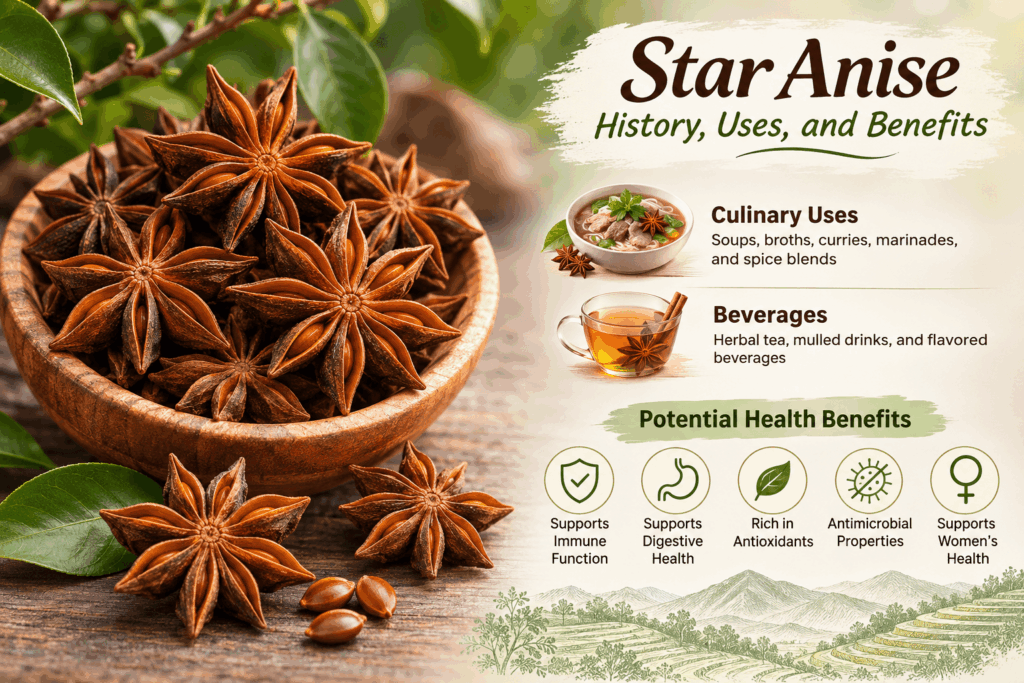
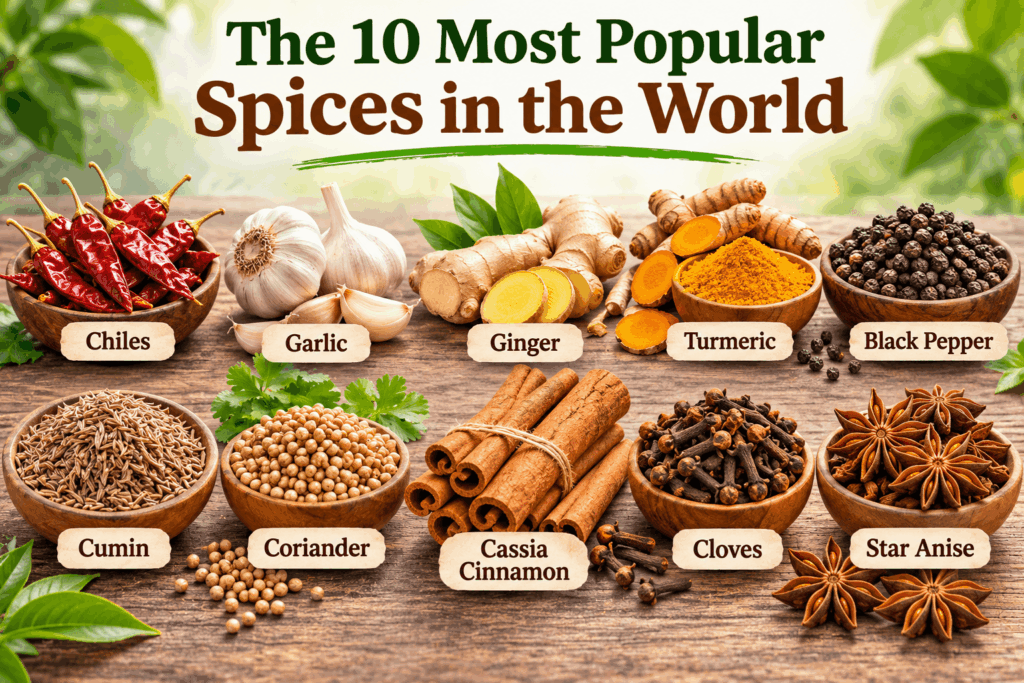
It can be combined with star anise, cloves, cardamom, black pepper, and other spices to create seasoning blends for meat, sauces, soups, and processed foods.
5. Food Manufacturing
In the food industry, Vietnamese cinnamon is used in bakery mixes, confectionery, sauces, beverages, seasonings, and various processed food products.
Its strong aromatic profile makes it suitable for manufacturers looking for a distinctive cinnamon flavor in commercial formulations.
6. Essential Oil and Fragrance Applications
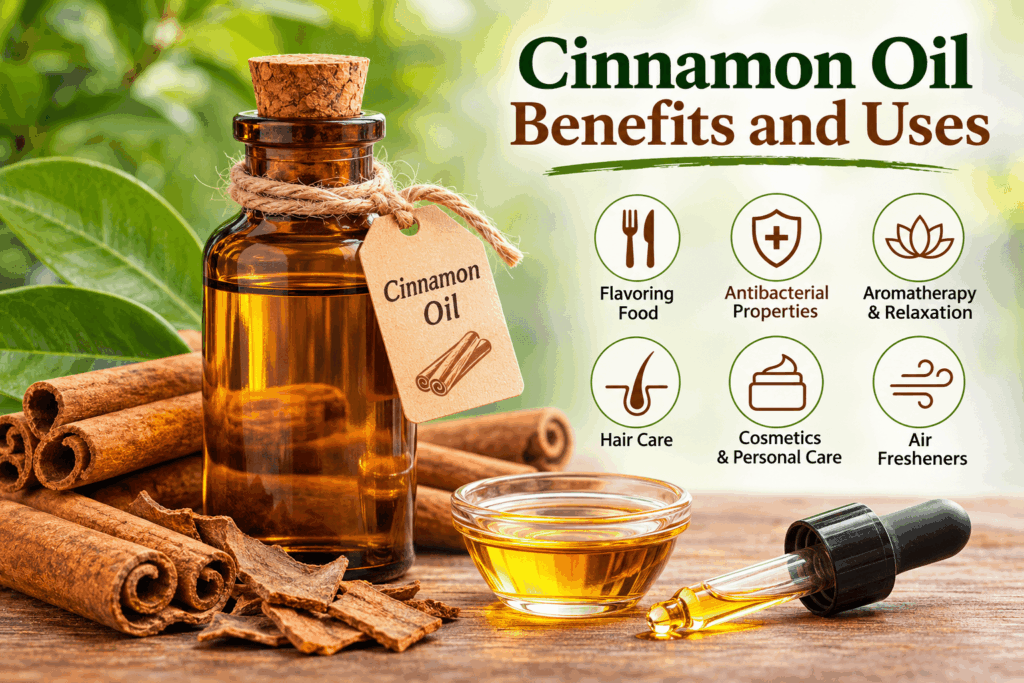
Cinnamon bark and other cinnamon plant materials can be processed to produce aromatic essential oils.
Cinnamon-derived ingredients are used in selected fragrance, flavoring, and industrial applications. Their suitability depends on the extraction method, product specifications, and applicable regulations.
Commercial Forms of Vietnamese Cinnamon
Vietnamese Cassia cinnamon is available in different commercial forms to meet the needs of importers, wholesalers, distributors, and food manufacturers.
Common product forms include:
- Stick Cinnamon: Whole or rolled pieces of cinnamon bark, commonly used in beverages, cooking, and spice packaging.
- Cigarette Cinnamon: Thin, rolled cinnamon bark pieces with a compact cylindrical appearance.
- Split Cinnamon: Cinnamon bark separated into long, narrow pieces.
- Broken Cinnamon: Smaller pieces of cinnamon bark suitable for grinding and further processing.
- Whole Tube Cinnamon: Hollow cylindrical cinnamon bark pieces.
- Pressed Cinnamon: Cinnamon bark processed into compact forms.
- Round Cut and Square Cut Cinnamon: Cinnamon bark cut into specific shapes and sizes for commercial applications.
- Cinnamon Powder: Finely ground cinnamon bark used in seasoning blends, bakery products, beverages, and food processing.
Different product forms are available according to buyer specifications, including dimensions, moisture requirements, admixture limits, packaging, and order quantities.
Frequently Asked Questions About Vietnamese Cinnamon
1. What is Vietnamese cinnamon?
Vietnamese cinnamon is a variety of Cassia cinnamon, commonly associated with the botanical species Cinnamomum loureiroi. It is known for its strong aroma, warm sweet-spicy flavor, and reddish-brown bark.
2. Is Vietnamese cinnamon the same as Cassia cinnamon?
Vietnamese cinnamon is a type of Cassia cinnamon. The term Cassia refers to a group of commercial cinnamon varieties, while Vietnamese cinnamon generally describes Cassia produced in Vietnam.
3. What is Vietnamese cinnamon also called?
Vietnamese cinnamon is commonly known as Vietnamese Cassia, Saigon cinnamon, or Vietnamese Cassia cinnamon in international trade. The name Saigon cinnamon is a commercial name and does not mean that all Vietnamese cinnamon is grown in Ho Chi Minh City.
4. What does Vietnamese cinnamon taste like?
Vietnamese cinnamon has a strong, warm, sweet-spicy flavor with a rich aroma. Compared with Ceylon cinnamon, it is generally more pungent and intense.
5. What is the difference between Vietnamese cinnamon and Ceylon cinnamon?
The main differences involve botanical origin, bark structure, flavor, and coumarin content.
Vietnamese Cassia generally has thicker, harder bark, a stronger flavor, and higher coumarin levels. Ceylon cinnamon has thin, delicate, multi-layered bark, a milder flavor, and naturally very low coumarin content.
6. Is Vietnamese cinnamon good for cooking?
Yes. Vietnamese cinnamon is widely used in soups, broths, curries, meat dishes, baked goods, beverages, desserts, and spice blends. Its strong aroma makes it suitable for recipes that require a pronounced cinnamon flavor.
7. Does Vietnamese cinnamon contain coumarin?
Yes. Vietnamese Cassia naturally contains coumarin, although the exact amount varies depending on the cinnamon material and product batch. Excessive long-term consumption may cause liver-related concerns.
8. What are the common forms of Vietnamese cinnamon?
Common commercial forms include:
- Cinnamon sticks
- Cigarette cinnamon
- Split cinnamon
- Broken cinnamon
- Whole tube cinnamon
- Pressed cinnamon
- Round-cut and square-cut cinnamon
- Cinnamon powder
These forms are supplied for cooking, food manufacturing, spice processing, and other commercial applications.
9. Which countries import Vietnamese cinnamon?
Vietnamese cinnamon is traded internationally and supplied to markets across Asia, the Middle East, Europe, and North America. Import demand and product requirements vary by destination market.
10. How should Vietnamese cinnamon be stored?
Vietnamese cinnamon should be stored in a cool, dry, and well-ventilated environment, away from direct sunlight, moisture, and strong odors.
Appropriate packaging and storage conditions help maintain its aroma, color, and product quality during transportation and warehousing.
Conclusion
Vietnamese cinnamon is a distinctive Cassia spice recognized for its strong aroma, warm sweet-spicy flavor, and versatile commercial applications. Grown in several regions of Vietnam, it has become an important ingredient in the international food and spice trade.
Available in various forms, including cinnamon sticks, split cinnamon, broken cinnamon, pressed cinnamon, and cinnamon powder, Vietnamese Cassia can meet a wide range of requirements from food manufacturers, spice distributors, wholesalers, and importers.
Beyond its culinary uses, Vietnamese cinnamon contains naturally occurring compounds that continue to attract scientific interest. However, its coumarin content should be considered when evaluating regular or high-dose consumption.
For international buyers, understanding the origin, characteristics, processing forms, and product specifications of Vietnamese cinnamon is essential when selecting a suitable supply source.
TOPAX supplies Vietnamese Cassia Cinnamon in different commercial forms, with flexible packaging and product specifications based on buyer requirements. Contact TOPAX to discuss your bulk cinnamon supply needs.