
The global seasonings and spices market plays an important role in the food and beverage industry, supplying ingredients that enhance flavor, aroma, color, and product consistency. From traditional culinary spices to customized seasoning blends, these products are widely used by households, restaurants, food processors, and manufacturers across international markets.
The market is influenced by evolving consumer preferences, the expansion of processed and convenience foods, international culinary trends, and increasing demand for diverse flavor profiles. At the same time, food safety, ingredient traceability, product quality, and sustainable sourcing have become important considerations for manufacturers and buyers.
For spice exporters and international buyers, understanding the global seasonings and spices market from 2026 to 2033 can help identify emerging demand, evaluate sourcing opportunities, and develop more effective procurement strategies.
Overview of the Seasonings and Spices Market
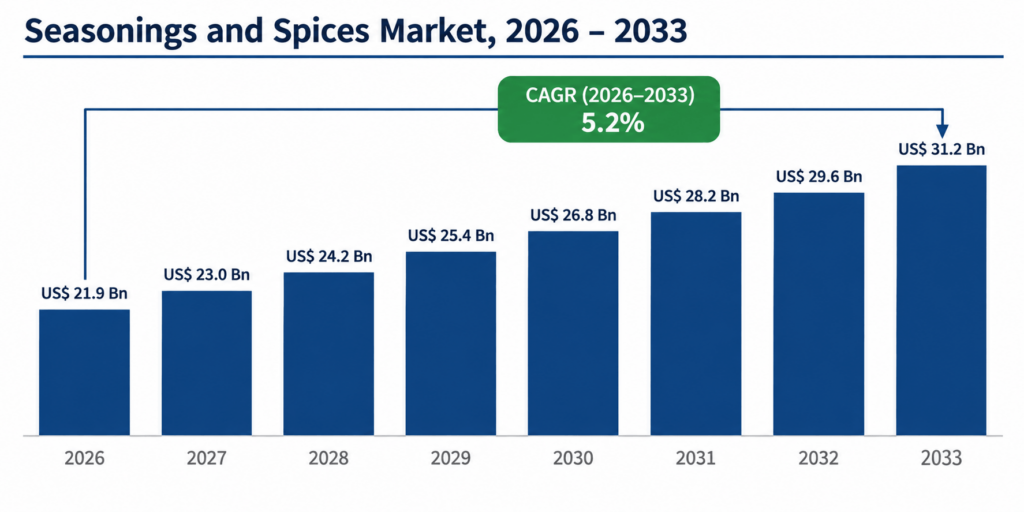
The global seasonings and spices market is projected to reach approximately US$21.9 billion in 2026 and is forecast to grow to US$31.2 billion by 2033, representing a compound annual growth rate (CAGR) of 5.2% over the forecast period. These figures reflect the market estimates provided for this article and should be interpreted according to the scope and methodology of the underlying market research report.
Several factors are expected to support market expansion, including changing dietary preferences, rising disposable incomes, urbanization, and increasing demand for convenient, flavorful food products. As consumers explore international cuisines and manufacturers introduce new food formulations, spices and seasoning blends remain important ingredients across multiple food categories.
According to the OECD-FAO Agricultural Outlook, rising incomes and urbanization are reshaping food consumption patterns, particularly in developing economies. Although this research concerns broader agricultural and food consumption trends rather than spice consumption specifically, it provides relevant context for understanding changes in food demand.
Food manufacturers are also placing greater emphasis on standardized seasoning formulations to maintain consistent flavor across processed foods, snacks, sauces, ready meals, and other manufactured products. This creates opportunities for suppliers that can deliver reliable ingredient quality, consistent specifications, and dependable supply.
For international spice buyers, market growth creates potential opportunities to source products such as black pepper, cinnamon, star anise, turmeric, ginger, and other culinary spices. However, actual demand and purchasing requirements vary by country, application, product grade, and distribution channel.
Factors Influencing the Seasonings and Spices Market
Drivers – Growing Demand for Ethnic and Convenience Foods
Growing interest in international cuisines is one of the important factors influencing demand for seasonings and spices. Consumers are increasingly exposed to different culinary traditions through restaurants, travel, social media, and international food products. This encourages manufacturers to develop flavors inspired by Asian, Indian, Middle Eastern, Mediterranean, and Latin American cuisines.
Convenience foods also contribute to demand. Ready-to-eat meals, instant noodles, packaged snacks, frozen foods, sauces, and prepared meat products frequently rely on spices and seasoning blends to deliver recognizable and consistent flavor profiles.
For food manufacturers, standardized seasoning systems can simplify production and help maintain consistency across manufacturing locations and product batches. For spice suppliers, these applications create opportunities to supply both individual spices and processed ingredients that meet specific customer requirements.
The growth of food processing and changing consumption patterns in emerging economies may further support demand. Nevertheless, the effect on individual spices depends on local culinary preferences, product pricing, and the development of relevant food manufacturing industries.
Restraints – Food Safety Concerns Related to Adulteration and Heavy Metals
Food safety remains a significant consideration in the international spices trade. Potential concerns include adulteration, undeclared ingredients, pesticide residues, microbial contamination, heavy metals, and other contaminants that may affect product suitability.
Adulteration can involve the addition of unauthorized substances, the substitution of lower-quality materials, or inaccurate product labeling. Such practices can undermine buyer confidence and create commercial, regulatory, and reputational risks for suppliers and importers.
Heavy metals and other contaminants are also relevant because spices may be exposed to contamination through agricultural soil, water, processing equipment, handling, or environmental conditions. The applicable limits and testing requirements vary by product and destination market.
To address these concerns, importers and manufacturers may require supplier assessments, documented product specifications, traceability records, and laboratory testing. Depending on the transaction, buyers may also request evidence of relevant food safety management systems.
For exporters, maintaining transparent sourcing practices and consistent quality control can help reduce shipment rejection risks and strengthen long-term commercial relationships.
Opportunities – Growth of Organic and Clean-Label Spices
Demand for organic and clean-label food products presents potential opportunities for spice producers, processors, and exporters. Some consumers prefer products with recognizable ingredients, fewer unnecessary additives, and clearer information about sourcing and production methods.
Food manufacturers are responding by reviewing ingredient lists, developing simpler formulations, and exploring natural flavor ingredients. This can create opportunities for suppliers of whole spices, ground spices, and seasoning ingredients that meet the relevant product and certification requirements.
Organic spices may appeal to buyers serving specialized retail, foodservice, and food manufacturing markets. However, organic claims must be supported by appropriate certification and compliance with the rules applicable to the target market.
Clean-label positioning is not a single universal certification. Buyers should therefore clarify what they mean by clean label, including ingredient restrictions, processing requirements, documentation, and labeling expectations.
For suppliers in Vietnam, products such as cinnamon, star anise, and black pepper may offer opportunities when their origin, quality, traceability, and technical specifications match buyer requirements.
Categories of the Seasonings and Spices Market
The seasonings and spices market can be analyzed by product type, product form, and end user. These categories help explain how ingredients are produced, processed, distributed, and used across different commercial applications.
Product Type Insights
The product type segment includes individual spices, herbs, spice mixtures, and formulated seasoning products. Each category serves different culinary and manufacturing purposes.
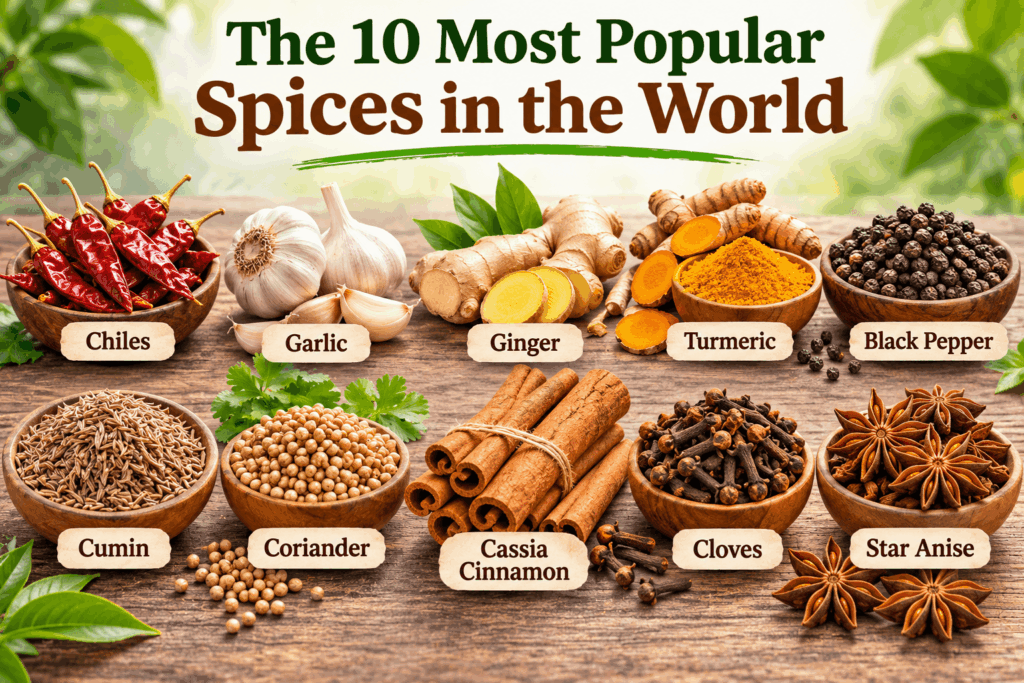
Common spice products include black pepper, white pepper, cinnamon, star anise, turmeric, ginger, cardamom, cloves, cumin, and coriander. Their flavor characteristics, aroma, physical form, and processing requirements influence how they are used in food products.
Herbs such as oregano, thyme, rosemary, basil, and parsley are also important ingredients in seasoning formulations. They are frequently used in sauces, meat products, snacks, dressings, and prepared meals.
Seasoning blends combine multiple spices, herbs, salt, flavor ingredients, or other components to produce a defined flavor profile. These blends are widely used by food manufacturers that require consistent taste, efficient production, and formulations tailored to specific products.
For bulk spice buyers, the selection of product type depends on the intended application, required flavor profile, quality grade, food safety specifications, and overall procurement cost.
Form Insights
Spices and seasonings are traded in several physical forms, depending on the product and intended application.
Whole spices: Products such as whole peppercorns, cinnamon sticks, and whole star anise are suitable for applications where the original physical form is important or where further processing will occur.
Broken spices and cut products: Broken cinnamon, broken star anise, and other cut forms may be suitable for grinding, extraction, seasoning production, or industrial processing.
Ground spices and powders: Ground black pepper, cinnamon powder, turmeric powder, and other powdered ingredients are used in seasoning blends, processed foods, sauces, and prepared meals.
Blended seasonings: These products combine ingredients to achieve a specified flavor profile and are often developed for particular food applications.
Whole and processed products have different storage, handling, and quality requirements. Buyers should consider moisture content, particle size, aroma retention, foreign matter, packaging, and the intended shelf life when selecting a product form.
End-User Insights
The market serves several end-user groups, each with distinct purchasing priorities.
Food and beverage manufacturers use spices and seasonings in snacks, sauces, bakery products, meat products, beverages, instant foods, and ready meals. They typically require consistent quality, reliable volumes, and specifications that support production processes.
Foodservice businesses include restaurants, hotels, catering companies, and institutional kitchens. Their purchasing decisions often depend on flavor consistency, product convenience, and cost efficiency.
Retailers and distributors purchase packaged spices and bulk ingredients for resale through supermarkets, specialty stores, online platforms, and wholesale channels. Product presentation, packaging formats, labeling, and consumer preferences can influence their requirements.
Industrial processors and ingredient manufacturers may purchase whole or broken spices for grinding, extraction, blending, or further processing. Their specifications can include physical characteristics, chemical parameters, purity, and testing documentation.
Understanding these end-user segments helps suppliers develop appropriate product specifications, packaging options, and commercial arrangements.
Regional Seasonings and Spices Market
Regional demand for seasonings and spices reflects differences in culinary traditions, food processing industries, consumer preferences, and trade networks. North America and Europe have established markets for packaged spices and formulated seasonings, while Asia-Pacific combines substantial domestic consumption with important spice-producing and processing countries.
The following regional analysis highlights general market characteristics rather than verified country-level market shares or growth rankings.
North America Seasonings and Spices Market Trends
North America has a diverse market for seasonings and spices, supported by retail food sales, foodservice, and a large processed food industry. Demand comes from traditional culinary applications as well as international cuisines, snack products, sauces, and prepared meals.
Food manufacturers need ingredients that deliver consistent flavor while meeting applicable quality, labeling, and food safety requirements. This creates opportunities for suppliers that can provide clear specifications, reliable documentation, and consistent deliveries.
Seasonings and Spices Market Trends in the United States
The United States is an important market for packaged spices, seasoning blends, and ingredients used in commercial food production. Consumer interest in international cuisines, grilling, convenience foods, and varied flavor profiles supports demand across multiple categories.
Food manufacturers use spices in snacks, sauces, meat products, frozen meals, and other processed foods. Retail demand also covers individual spices and ready-made blends for home cooking.
For exporters, the US market requires careful attention to import regulations, food safety, labeling, and product-specific requirements. Buyers may also request information about pesticide residues, microbiological quality, contaminants, traceability, and packaging.
Vietnamese cinnamon, black pepper, and star anise may be relevant to US buyers seeking ingredients for retail products or industrial applications. Commercial suitability depends on price competitiveness, product specifications, compliance, and the buyer’s sourcing strategy.
Seasonings and Spices Market Trends in Canada
Canada’s market includes retail spices, foodservice ingredients, and seasonings used by food manufacturers. Its multicultural population contributes to demand for ingredients associated with Asian, South Asian, Middle Eastern, and other culinary traditions.
Food processors may use spices in sauces, snacks, prepared meals, meat products, and specialty foods. Retailers and distributors also require products that meet their packaging, labeling, and quality expectations.
For international suppliers, successful sourcing relationships depend on reliable product specifications, appropriate documentation, consistent supply, and compliance with Canadian import requirements. Organic products may provide additional opportunities when supported by the required certification.
Europe Seasonings and Spices Market Trends
Europe represents an established market for culinary spices, herbs, and formulated seasoning products. Demand is supported by retail food consumption, foodservice, and the region’s food manufacturing industry.
Buyers often evaluate suppliers based on quality consistency, traceability, contaminant control, sustainability information, and compliance with applicable food legislation. Requirements can vary according to the product, importing country, and intended use.
For exporters, Europe offers potential opportunities for whole spices, ground products, and ingredients used in industrial food production. Suppliers must verify relevant European Union or national requirements before shipping.
Seasonings and Spices Market Trends in Germany
Germany has a developed food processing sector and a market for spices and seasoning ingredients used in retail products, sauces, processed foods, and foodservice.
Manufacturers require ingredients that can deliver consistent flavor and comply with their technical and quality standards. Documentation, traceability, and control of contaminants are important considerations for many commercial buyers.
Interest in organic and plant-based foods can also create opportunities for suitable spice ingredients. However, suppliers should not assume that all buyers require organic certification or that a particular product will command a premium without market-specific evidence.
Vietnamese spice exporters may approach German importers and ingredient distributors with products such as cinnamon, pepper, and star anise, provided that the products meet the customer’s specifications and applicable regulations.
Seasonings and Spices Market Trends in the United Kingdom
The United Kingdom has a diverse market for spices and seasonings, supported by retail sales, restaurants, foodservice, and food manufacturing. Culinary traditions and international food preferences contribute to demand for a wide variety of spices and blends.
Food manufacturers may use spices in snacks, sauces, ready meals, meat alternatives, and prepared foods. Importers typically assess product quality, supply reliability, traceability, and compliance with applicable UK requirements.
Suppliers targeting this market should confirm labeling, food safety, and import documentation requirements before shipment. Product specifications should clearly identify the spice, its form, origin, grade, packaging, and any required testing parameters.
Asia-Pacific Seasonings and Spices Market Trends
Asia-Pacific is a major region for spice cultivation, consumption, processing, and trade. Its markets include countries with long-established spice traditions as well as expanding food manufacturing industries.
Demand is shaped by regional cuisines, population size, changing purchasing power, urbanization, and the growth of packaged and convenience foods. The region also contains important producers and exporters of spices such as pepper, cinnamon, turmeric, ginger, and star anise.
For international buyers, Asia-Pacific provides a broad sourcing base. However, prices, product specifications, harvest conditions, export availability, and regulatory requirements differ among countries and products.
Seasonings and Spices Market Trends in China
China has a substantial culinary spice market, with demand associated with regional cuisines, foodservice, processed foods, and seasoning formulations. Spices and aromatic ingredients are used in sauces, meat products, soups, prepared meals, and traditional cooking applications.
Food manufacturers and distributors may require whole spices, processed ingredients, and standardized seasoning blends. Product quality, aroma, consistency, and suitability for the intended application influence purchasing decisions.
China is also an important producer of certain spices and aromatic ingredients, including Chinese cassia. This creates a market in which domestic supply, imported products, and local processing requirements can interact.
Exporters considering the Chinese market should evaluate product-specific import conditions, documentation, food safety requirements, and commercial demand before entering into supply arrangements.
Seasonings and Spices Market Trends in India
India is a major spice-producing, consuming, processing, and exporting country. Spices are integral to regional cuisines and are used extensively in household cooking, foodservice, packaged foods, and industrial seasoning production.
Demand covers a wide range of products, including pepper, cinnamon, cumin, turmeric, coriander, cardamom, and other spices. Food manufacturers also use spice blends and processed ingredients for packaged snacks, sauces, instant foods, and ready-to-cook products.
India is an important potential destination for Vietnamese cinnamon and other spices, although actual demand depends on price, grade, domestic availability, and the requirements of individual buyers.
For Vietnamese exporters, market research should focus on the specific spice, product form, import conditions, buyer segment, and competitive pricing. Establishing clear specifications and confirming documentation requirements can help support commercial discussions with Indian importers and distributors.
Competitive Landscape of the Seasonings and Spices Market
The seasonings and spices market includes multinational flavor and ingredient companies, branded spice businesses, agricultural commodity suppliers, and specialized spice processors. Competition is influenced by product quality, sourcing networks, research and development, manufacturing capabilities, distribution, and the ability to meet changing customer requirements.
The companies listed below operate in related areas of spices, seasonings, flavor ingredients, extracts, or food ingredient solutions. They should not be interpreted as a verified ranking of the largest companies in the entire global spice market.
Givaudan SA: A Swiss company specializing in flavors, fragrances, and related ingredient solutions, including savory applications.
Kerry Group plc: An international taste and nutrition company supplying ingredients and solutions to food and beverage manufacturers.
Ajinomoto Co., Inc.: A Japanese food and biotechnology group known for umami seasonings, amino acids, and food ingredient solutions.
DSM-Firmenich AG: A company formed from the merger of DSM and Firmenich, operating in nutrition, health, beauty, and flavor-related markets.
Takasago International Corporation: A Japanese company specializing in flavors, fragrances, aroma ingredients, and related technologies.
Olam Group / ofi: A global food and agricultural business with operations in ingredients and spice sourcing, processing, and supply.
Archer Daniels Midland Company (ADM): An agricultural processing and ingredient company serving food, beverage, and other markets.
Robertet SA: A French company known for natural raw materials, fragrances, and flavor ingredients.
Sensient Technologies Corporation: A supplier of colors, flavors, and specialty ingredients for food and other industries.
Kalsec Inc.: A company providing natural spice and herb extracts, colors, antioxidants, and related ingredients.
McCormick & Company, Inc.: A major spice and seasoning company serving consumer and commercial food markets.
Symrise AG: A German company specializing in flavors, fragrances, nutrition, and ingredient solutions.
Frutarom Industries Ltd.: A former flavor and specialty ingredient company acquired by International Flavors & Fragrances (IFF) in 2018; it is not an independent current competitor under its former ownership.
Synthite Industries Ltd.: An Indian producer specializing in spice extracts, natural ingredients, and related products.
International Flavors & Fragrances Inc. (IFF): A global ingredients company operating in flavors, fragrances, food ingredients, and related markets.
These businesses compete in different segments of the wider market, from consumer spice products to customized industrial seasoning systems. Their competitive strengths are not identical: some focus on branded retail products, while others emphasize flavor development, ingredient extraction, agricultural sourcing, or customized formulations.
For spice exporters, competition also comes from regional producers and suppliers that specialize in individual commodities. In these segments, buyers may place particular emphasis on origin, grade, aroma, moisture, contaminant control, traceability, packaging, price, and shipment reliability.
Frequently Asked Questions About the Seasonings and Spices Market
What Is the Projected Size of the Global Seasonings and Spices Market in 2026?
Based on the market estimates used in this article, the global seasonings and spices market is projected to reach approximately US$21.9 billion in 2026. The estimate covers the market scope defined by the underlying research source and should not automatically be treated as the value of all global spice production or international spice trade.
How Much Will the Seasonings and Spices Market Be Worth in 2033?
The market is projected to reach approximately US$31.2 billion by 2033 under the forecast used in this article. This represents expected growth over the forecast period rather than a confirmed future market value.
What Is the Expected CAGR of the Seasonings and Spices Market from 2026 to 2033?
The expected compound annual growth rate (CAGR) is 5.2% from 2026 to 2033, according to the estimates provided for this article. CAGR describes the annualized growth rate over a specified period; it does not mean that the market will necessarily grow by exactly 5.2% in every individual year.
What Factors Are Driving the Seasonings and Spices Market?
Key factors include demand for international cuisines, growth in convenience foods, expansion of food manufacturing, changing dietary preferences, and the use of standardized seasoning blends. Food safety requirements, raw material availability, price fluctuations, and regulatory compliance can also influence market development.
Which Regions Are Important in the Global Seasonings and Spices Market?
North America, Europe, and Asia-Pacific are important regions for spice consumption, food manufacturing, processing, and trade. Their market characteristics differ: North America and Europe have established retail and industrial ingredient markets, while Asia-Pacific combines major producing countries with substantial domestic consumption and growing food processing activity.
What Opportunities Does the Market Offer to Spice Exporters?
Potential opportunities include supplying whole spices, broken spices, ground ingredients, and products for industrial processing. Buyers may seek suppliers that can provide consistent quality, suitable packaging, traceability, relevant testing documentation, and reliable shipment coordination. Opportunities depend on the product, destination market, pricing, and buyer requirements.
Why Are Food Safety and Traceability Important in the Spice Trade?
Food safety and traceability help buyers assess product suitability, verify origin and batch information, and manage contamination or quality risks. Depending on the destination market and product, importers may require laboratory reports, technical specifications, food safety documentation, and compliance with applicable regulations.
How Can International Buyers Source Spices from Vietnam?
International buyers can approach Vietnamese exporters and suppliers with clear information about the required spice, product form, quality grade, order volume, packaging, destination, and applicable testing requirements. Vietnamese cinnamon, star anise, and black pepper are examples of products that may be relevant to buyers seeking spice ingredients from Vietnam.
Conclusion
The global seasonings and spices market is expected to continue developing through 2033, supported by changing food preferences, demand for convenience, international culinary influences, and the needs of food manufacturers. At the same time, product quality, food safety, traceability, and sourcing reliability remain important considerations throughout the supply chain.
For importers, wholesalers, distributors, and food manufacturers, understanding market trends can help identify suitable ingredients and evaluate potential suppliers. For exporters, meeting buyer specifications and maintaining clear communication are important steps toward building sustainable international trade relationships.
Vietnam is a relevant sourcing origin for spices such as cinnamon, star anise, and black pepper. TOPAX supplies Vietnamese spice products for international buyers and welcomes inquiries about product forms, grades, packaging, and shipment requirements. Buyers can contact TOPAX to discuss their sourcing needs and determine whether the available products match their commercial specifications.