

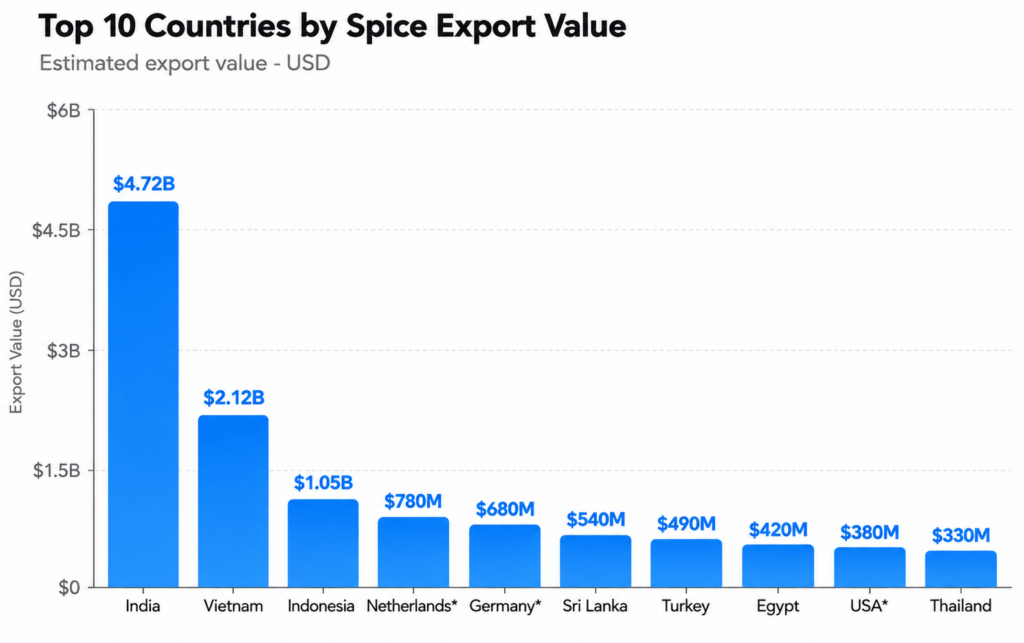
The world’s leading spice-exporting countries include India and Vietnam, two nations that play major roles in global markets for black pepper, chili, and other important spices. Other key players include Indonesia, China, Bangladesh, Sri Lanka, Pakistan, Turkey, Germany, and the Netherlands.
India remains one of the world’s leading spice exporters, supplying chili, turmeric, cumin, and other spices, with annual spice export revenues exceeding US$3.5 billion in 2023. Vietnam specializes in pepper and cinnamon, while Indonesia is known for nutmeg and cloves. The combination of large-scale production, favorable agricultural conditions, and strong processing capabilities has made these countries important participants in the global spice trade, which is valued at more than US$10 billion.
For businesses looking for a reliable spice supplier, understanding the strengths of different spice-exporting countries can help identify suitable sourcing partners and opportunities in international markets.
Overview of the US$15–20 Billion Global Spice Export Market
The global spice trade, including whole, ground, and processed spices, is estimated to be worth approximately US$15–20 billion annually, with India and Vietnam playing significant roles in production and exports. Major traded spices include black pepper, chili, turmeric, cinnamon, nutmeg, and cloves. In 2023, global spice exports exceeded four million metric tons, demonstrating the scale of this international industry.
Premiumization and sustainability are becoming increasingly important market trends. Organic, Fairtrade, and Rainforest Alliance certifications are receiving greater attention from buyers in the European Union, the United States, and the Middle East. These developments are encouraging exporters to adopt stricter quality-control procedures, improve traceability, and comply with applicable regulations.
Climate change, including irregular rainfall, changing temperatures, and plant diseases, affects spice yields, particularly for rain-fed crops such as black pepper and nutmeg. Exporters with digitally traceable supply chains, climate-resilient sourcing strategies, and sustainable production practices may gain a competitive advantage.
Future success depends not only on production volume but also on reliable sourcing, appropriate certifications, and transparent, legally compliant trading practices. For every spice manufacturing company, these factors are increasingly important when serving international buyers.
Top 10 spice-exporting countries in the world, by Value and Products
1. India — A Leading Spice Exporting Nation
India is a major force in global spice exports, with annual export revenues estimated at US$3–3.5 billion. Its main products include black pepper, chili, turmeric, cardamom, and cumin.
Key strengths include diverse agricultural climates, a combination of large- and small-scale production, and well-developed processing infrastructure. Challenges include climate change, price fluctuations, and labor shortages.
Notable companies in the Indian spice industry include AVT Natural, Synthite, and VVF.
2. Vietnam — A Specialist in Pepper and Cinnamon
Vietnam is a major global supplier of spices, particularly black pepper and cinnamon. Its spice export value is estimated at approximately US$1–1.2 billion, according to the figures presented in this overview.
Vietnam’s strengths include high crop productivity, modern drying and processing technologies, and export-oriented supply chains. Challenges include climate change, soil degradation, and dependence on a relatively limited number of major crops.
Vietnamese spice manufacturers, exporters, and trading companies play an important role in supplying international buyers with pepper and cinnamon. Companies mentioned in the original market overview include Hoang Gia and Viet Gia.
3. Indonesia — A Hub for Nutmeg, Cloves, and Pepper
Indonesia exports an estimated US$900 million to US$1 billion worth of spices, particularly nutmeg, cloves, and pepper.
Its strengths include rich biodiversity and traditional expertise in spice cultivation. Challenges include inconsistent product quality, transportation bottlenecks, and fragmented smallholder farming.
Companies and organizations operating in the sector include PT Indofood, PT Sinar Mas, and local agricultural cooperatives.
4. The Netherlands — A Leader in Spice Re-Exports and Processing
With estimated spice export revenues of US$700–800 million, the Netherlands is known for value-added processing, spice blending, and redistribution throughout the European Union.
Its advantages include advanced port infrastructure, logistics networks, and packaging capabilities. Challenges include dependence on imported raw spices and the need to maintain supply-chain traceability.
Key companies mentioned in this sector include Euroma, Verstegen, and Olam Netherlands.
5. Germany — A Supplier of Specialty and Organic Spices
Germany exports an estimated US$600–700 million worth of spices annually, focusing on organic products, Fairtrade products, and premium spice blends.
Its strengths include established quality-control systems and access to European markets. Challenges include sustainable sourcing requirements and rising raw material costs.
Notable companies include Fuchs Gewürze and Ostmann Gewürze.
6. Sri Lanka — A Major Producer of Ceylon Cinnamon
Sri Lanka exports an estimated US$500–550 million worth of spices, primarily Ceylon cinnamon, pepper, and cloves.
Its strengths include established product recognition, quality positioning, and cooperative networks. Challenges include intensive cultivation and vulnerability to changing weather conditions.
Exporters operating in the sector work with national spice industry organizations, including the Sri Lanka Export Development Board and relevant cinnamon industry associations.
7. Turkey — An Exporter of Paprika, Red Pepper, and Herbs
Turkey exports an estimated US$450–500 million worth of spices, focusing on paprika, red pepper, and herbs.
Its strengths include established regional brands, irrigation systems, and consistent processing capabilities. Challenges include drought risks and coordination among smallholder farmers.
Local cooperatives and private processing companies play important roles in the sector.
8. Egypt — An Exporter of Herbs and Spices
Egypt exports an estimated US$400–450 million worth of herbs and spices, specializing in cumin, coriander, and dried herbs.
Its strengths include fertile areas around the Nile, substantial agricultural production, and established export infrastructure. Challenges include dependence on irrigation, climate risks, and supply consistency.
Companies operating in the Egyptian herb and spice sector include Egyptian Spice & Herb Co.
9. The United States — A Market for Specialty and Organic Spices
The United States exports an estimated US$350–400 million worth of spices, particularly dried, processed, and organic products.
Its strengths include established brands, advanced technology, and experience with international compliance standards. Challenges include high production costs and dependence on imported spice raw materials.
Major companies in the US spice industry include McCormick & Company and Frontier Co-op.
10. Thailand — A Specialist in Pepper and Chili
Thailand exports an estimated US$300–350 million worth of spices, focusing on white and black pepper, dried chili, and paprika.
Its strengths include efficient processing and demand from Asian and European markets. Challenges include fragmented smallholder production and sensitivity to climate change.
Thai Pepper Co., AD Spices, and regional cooperatives are among the organizations mentioned in this sector.
Key Challenges Facing Major Spice Exporters
Climate Change and Extreme Weather
Major spice-producing countries, including India, Vietnam, Indonesia, and Sri Lanka, are facing increasing climate-related challenges. Irregular rainfall, prolonged droughts, and flooding can reduce yields of key crops such as chili, black pepper, cinnamon, and turmeric.
Pest infestations and plant diseases, including aphids, mealybugs, and fungal infections, may become more severe under changing climatic conditions. These problems can lead to crop losses, declining product quality, and fluctuations in export volumes.
For a spice exporter, managing these risks is important for maintaining a stable supply and meeting international customer requirements.
Fragmented Smallholder Farming and Low Farmer Incomes
Spice production often depends on smallholder farmers working relatively fragmented plots of land. Limited mechanization, restricted access to credit, and low profit margins can discourage investment in quality improvements, sustainable practices, and productivity.
Unstable supply and inconsistent spice quality create challenges for exporters attempting to meet the requirements of international buyers. Stronger cooperation between farmers, processors, and bulk spice suppliers can help improve consistency and sourcing reliability.
Increasing Sustainability and Compliance Requirements
International buyers increasingly expect compliance with environmental, social, and governance (ESG) requirements, relevant certifications, and traceability standards. These may include organic certification, Fairtrade, and applicable forest-protection standards.
Some regulations require geographic verification, farm-level identification, and comprehensive supply-chain records. Meeting these requirements adds complexity to export operations, particularly for companies sourcing from multiple farms and intermediaries.
For spice manufacturing companies, documented sourcing procedures and reliable quality-management systems can help support access to regulated international markets.
Traceability Gaps in Spice Supply Chains
Spices frequently pass through several intermediaries before reaching exporters or international buyers. This can create risks involving inaccurate origin declarations, inconsistent quality, and incomplete documentation.
Paper-based or informal tracking systems may make it difficult to provide audit-ready traceability information demanded by premium international markets.
Digital records, documented sourcing procedures, and stronger coordination between farmers, processors, and exporters can help improve transparency across the supply chain.
Logistics and Export Infrastructure Constraints
High freight costs, port congestion, limited storage capacity, and inadequate domestic infrastructure can delay shipments. Seasonal increases in harvest volumes in countries such as India and Vietnam may intensify logistical bottlenecks.
Geopolitical tensions and global container shortages can also extend delivery times, increase costs, and reduce competitiveness. Reliable logistics planning is therefore an important consideration for any spice export company serving international customers.
Key Highlights from the 2025 Global Spice Export Rankings
India and Vietnam Play Major Roles in Global Spice Exports
The 2025 ranking presented in this overview identifies India and Vietnam as leading participants in international spice trade. According to the source material, together they account for more than 50% of global spice trade value.
India is particularly important for chili, turmeric, and cumin, while Vietnam is known for black pepper and cinnamon. Production scale, mechanized processing, and export-oriented logistics can provide advantages in pricing and supply reliability for international buyers.
Businesses researching the biggest exporter of spices, the biggest spice exporters, or the largest exporter of spices in the world should compare clearly defined product categories, reporting periods, and trade statistics. Rankings may vary depending on whether the data covers all spices, individual products, or re-exported goods.
Africa and Latin America Are Expanding Their Presence
Origins such as Madagascar and Peru are expanding their participation in specialty spice markets, alongside established producers in Asia. Madagascar vanilla, Sri Lankan cinnamon, and Peruvian chili are attracting attention in premium segments.
This trend reflects growing international interest in distinctive flavors, specialized products, and transparent sourcing.
Certified and Specialty Spices Are Gaining Ground in Premium Markets
Demand for organic, Fairtrade, Rainforest Alliance-certified, and non-GMO products continues to attract attention, particularly in the European Union, the United States, and Japan.
Exporters with supply chains that meet applicable certification requirements may be better positioned to serve premium buyers and develop long-term commercial relationships. Businesses seeking organic spices in bulk or working with organic spice suppliers should verify the relevant certification and documentation for each product.
Traceability Is Becoming a Market Differentiator
International buyers increasingly expect transparency from farm to export. Digital traceability, geographic identification, and comprehensive supply-chain records for spices such as pepper, vanilla, and chili are becoming important for accessing regulated markets and premium contracts.
For a spice supplier, the ability to document product origin and sourcing practices can strengthen buyer confidence and support long-term cooperation.
Diversified Sourcing and Climate Resilience Are Increasingly Important
Global buyers are diversifying sourcing channels to reduce climate-related risks. Their strategies may include drought-tolerant crops, agroforestry-based production, and emerging origins in Africa and Latin America.
Exporters investing in sustainable and climate-resilient production practices may be better positioned to maintain stable export volumes and supply reliability.
Leading Global Businesses in the Spice Export Ecosystem
Multinational Exporters and Spice Traders
Global spice trade involves multinational companies that manage sourcing, processing, logistics, and quality control across Asia, Africa, and Latin America. These businesses connect smallholder farmers with international buyers while supporting supply consistency and compliance with relevant standards.
- Olam Agri: Operates sourcing networks and supports initiatives involving traceability, sustainable farming, and climate resilience.
- McCormick & Company: A global spice company with integrated sourcing, processing, and quality-assurance operations.
- Archer Daniels Midland (ADM): Operates large-scale agricultural sourcing, logistics, and ingredient supply networks.
- Louis Dreyfus Company (LDC): An international agricultural merchant involved in sourcing and trading a range of agricultural commodities.
- Cargill: Provides global agricultural sourcing, processing, and supply-chain services, including services relevant to food ingredients.
These companies illustrate the different business models operating in international spice and agricultural supply chains. Their product portfolios and activities vary, so buyers should assess each company’s actual offerings before selecting a supplier.
National Cooperatives and Export Organizations
National associations, cooperatives, and export organizations support industry development through quality guidance, farmer training, market information, and export promotion.
- India — Spices Board India: Supports the development and promotion of Indian spices, including quality-related initiatives and international marketing.
- Vietnam — Vietnam Pepper and Spice Association (VPSA): Represents industry interests and supports the development of Vietnam’s pepper and spice sector.
- Sri Lanka — Sri Lanka Export Development Board and relevant cinnamon industry bodies: Support export promotion and the development of Sri Lankan spice products.
- Indonesia — Spice industry associations and export organizations: Support the development and promotion of products such as nutmeg, cloves, and vanilla.
These organizations can be useful sources of industry information for companies researching sourcing markets, export regulations, and supplier networks.
Specialty Importers and Global Buyers
Specialty importers, food manufacturers, and premium spice brands influence market expectations for product quality, certification, and traceability.
- McCormick’s specialty spice operations: Serve customers across multiple spice and seasoning categories.
- Frontier Co-op: Offers a range of spices and seasonings, including products marketed around organic and responsible sourcing.
- Whole Foods Market and specialty retailers: Apply product, sourcing, and supplier requirements that can influence purchasing practices across the supply chain.
- Nestlé and Givaudan: Operate in global food, flavor, and ingredient markets, where sourcing requirements and sustainability considerations are important.
For exporters, understanding buyer requirements can help guide decisions about product specifications, documentation, processing, and packaging.
The Future of Global Spice Exporters
The global spice industry, with annual market estimates varying by scope and methodology, has opportunities for further development driven by changing consumer preferences, sustainability requirements, and technology adoption.
Growing Demand for Premium and Specialty Spices
Consumers in North America, Europe, and the Middle East are increasingly interested in high-quality, sustainably sourced, and distinctive spices.
Organic labels, Fairtrade certification, and single-origin products can help differentiate premium offerings and create opportunities for supply chains that include smallholder farmers. Exporters should ensure that any certification or origin claim is supported by appropriate evidence.
Sustainability and Regulatory Compliance
Exporters face increasing pressure to comply with sustainability, traceability, and food-safety requirements, including applicable European Union due-diligence regulations and pesticide-residue limits.
Origin verification, deforestation-free sourcing where required, and appropriate environmental and social practices are becoming important considerations for international market access.
Digital Traceability and Farm Mapping Technology
Technologies such as blockchain, geographic information systems (GIS), and Internet of Things (IoT)-enabled supply-chain tools are changing how spices are sourced, tracked, and documented.
Exporters using effective digital traceability systems may be better equipped to meet buyer requirements, demonstrate product provenance, and support access to premium markets.
Climate Resilience and Adaptation
Climate change, including irregular rainfall, drought, and plant disease, threatens important spice-growing regions in India, Vietnam, Sri Lanka, and Indonesia.
Exporters investing in climate-smart agriculture, crop diversification, and adaptive farming techniques may be better positioned to protect yields and maintain more stable supplies.
Emerging Origins and Market Diversification
New and developing spice-producing regions in Africa, Latin America, and Southeast Asia offer additional sourcing opportunities.
Diversifying origins can help reduce exposure to climate disruptions, geopolitical uncertainty, and price volatility. For buyers, working with several qualified bulk spice suppliers may help improve supply-chain resilience.
Integration with the Global Food and Flavor Industries
The spice sector is becoming increasingly connected with food processing, beverages, and flavor manufacturing.
Value-added activities such as grinding, blending, and specification-based packaging can create additional commercial opportunities and reduce dependence on exports of unprocessed raw materials.
Top 5 Practical Solutions to Strengthen Global Spice Exports
Successful participation in global spice markets requires more than production capacity. Exporters and buyers can strengthen commercial cooperation by focusing on five practical areas:
- Improve quality management: Establish clear product specifications, suitable testing procedures, and consistent quality-control practices.
- Strengthen traceability: Maintain accurate records of product origin, sourcing partners, processing, and shipment documentation.
- Invest in sustainable sourcing: Work with suppliers and farmers to improve sourcing practices and meet applicable customer and regulatory requirements.
- Develop resilient supply chains: Diversify qualified sourcing channels, plan for seasonal fluctuations, and improve logistics coordination.
- Build long-term B2B relationships: Communicate clearly about product grades, order volumes, packaging, lead times, and documentation requirements.
For international buyers, selecting a suitable spice wholesaler, spice trader, or spice export company involves assessing product suitability, supply capability, documentation, and commercial reliability rather than relying on market-ranking claims alone.
About TOPAX – Vietnamese spice manufacturer and supplier
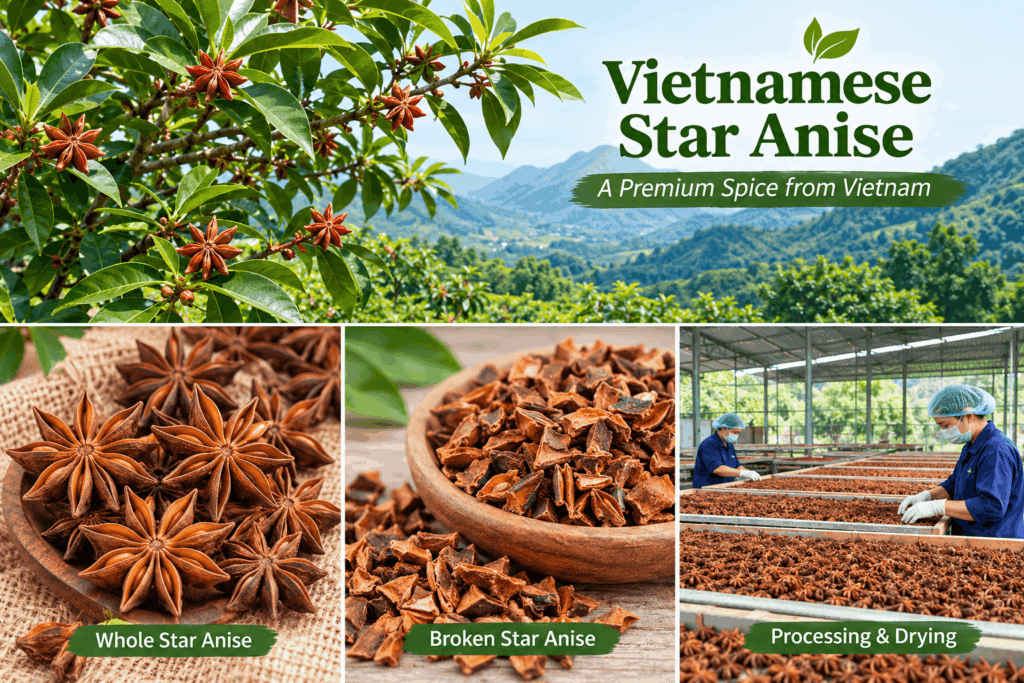
At TOPAX, we offer a diverse range of spice products to meet our customers’ varied needs, including cinnamon, star anise, pepper, coffee and desiccated coconut. With a variety of product specifications available, we aim to provide suitable options tailored to each customer’s specific requirements.
Contact TOPAX today to receive more useful information about our spice products and explore solutions that best suit your business needs.

Good news
Thank you for taking the time to rate our post.